
Albiate: the poplar avenue that is collapsing and will not be replaced
Written by Giuseppe Caprotti
Drafted on October 1, updated on October 10, 2024
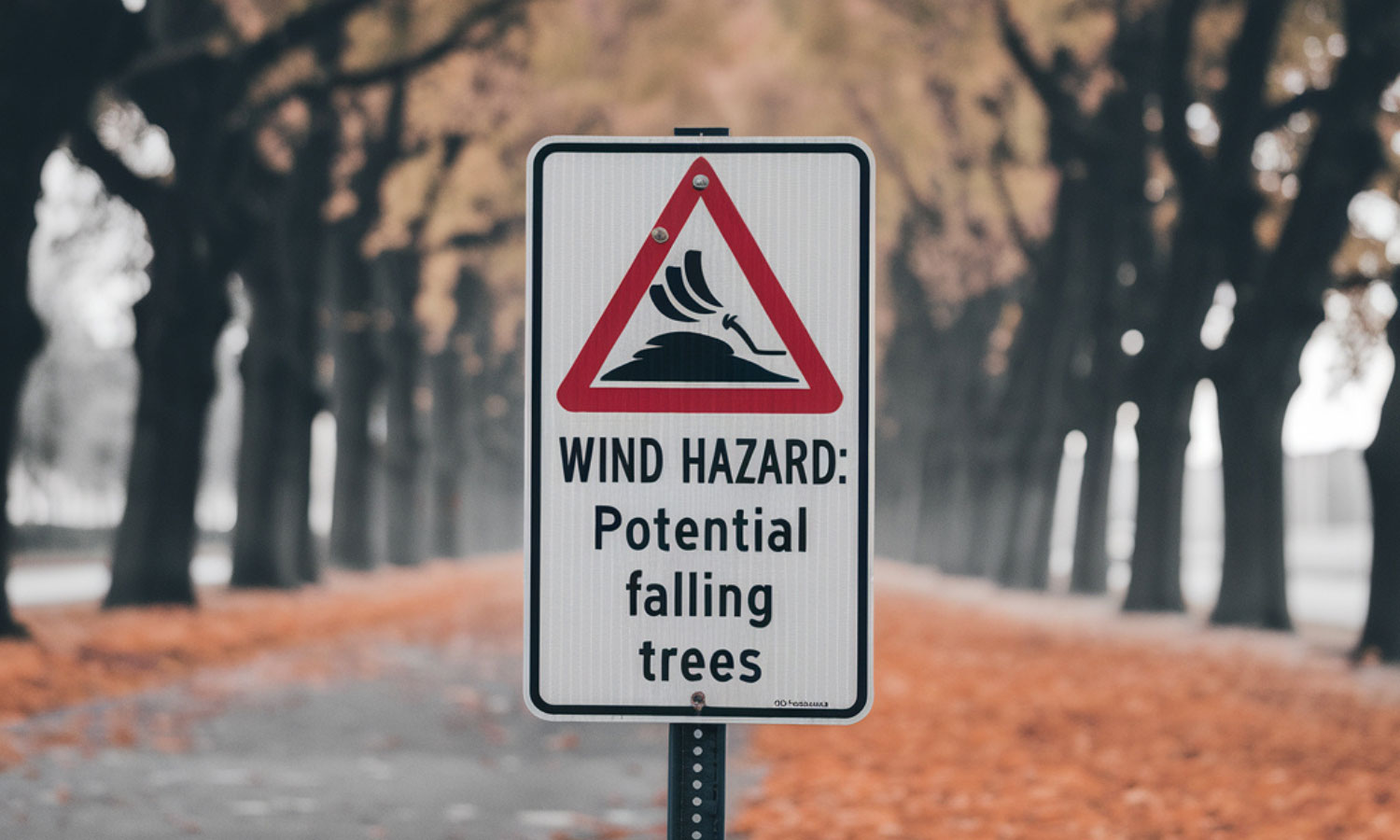
The situation is dramatic: the poplar avenue in Albiate, which runs along the Monza-Carate road, is at risk of disappearing unless a different tree species is introduced. Poplars are ill-suited to cope with climate change for two reasons: their roots do not penetrate deeply enough to withstand the increasing water stress, and their height makes them vulnerable to the increasingly frequent storms—even in Brianza.
In April, out of 271 poplars planted 25 years ago, 116 had died (271 – 155), almost half. I requested permission to replace them with lime trees in the Regional Park of the Lambro Valley but, to date, after several months of waiting, I have received no response.
For at least three years I have been managing this situation by clearing and replacing the dead poplars. However, the young grafts are dying. At this point, I can simply say that I will no longer waste energy and money planting new poplars. I will wait for the old trees to die, and then reforest with new species.
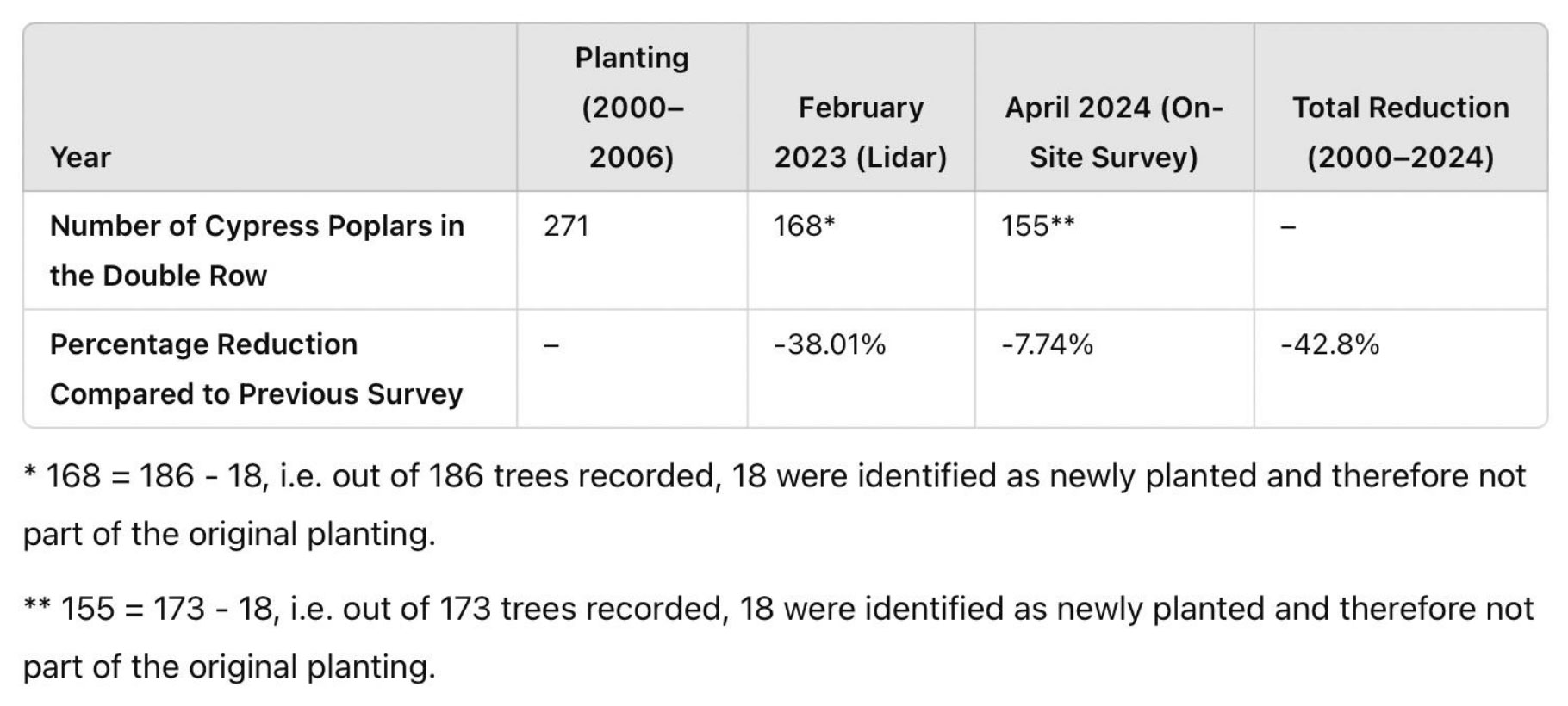
In just 25 years, primarily due to wind and water stress, 42.8% of the trees in this double row have been lost.
Below are some reflections by Luigi De Vecchi, President of the Sylva Foundation, on climate change.
Temperatures are rising. And no special studies—though they certainly exist—are needed to understand that our cities need more trees.
“Absolutely,” he says, “but the issue is cultural. Even though trees reclaim polluted soil, purify the air we breathe, provide shade, food, and even raw materials for our cosmetics, they are not viewed as living beings. In cities, they’re often seen as a problem due to their roots and falling leaves. This mindset needs to change: trees are fundamental to our future sustainability.”
But you’re an investment banker—you think in terms of profitability. Isn’t sustainable finance an oxymoron?
“Unfortunately, it is. But we need to start envisioning an evolution of our capitalist system. Again, for my generation, this issue wasn’t as urgent as it is now. Those of us currently in our sixties created a system that brings a range of benefits; however, it failed to address certain key issues, particularly sustainability. We need the determination to reform capitalism and give it a more social dimension.”
How?
“There are ways. In the United States, for example, there are incentives for large companies that invest in the nonprofit sector and in all those areas—like forest reforestation—where the government lacks the resources to intervene. Each country, including Italy, should develop its own tailored solutions.”
It seems a collective effort is needed, similar to the COVID vaccination campaign. However, in that case, there was a clear sense of urgency.
“Collaboration is key. My work is about bringing together different worlds—financial institutions, industrial companies, and nonprofit organizations. These are often realities that speak different languages; if we also include schools, universities, and families, it becomes even more complex. But we can no longer think in silos: survival is everyone’s concern.”
The figures in this article, which focuses on Albiate, do not refer solely to poplars but to the entire area over the course of a year.
Below: the area is losing both its trees and its potential for cultivation.