The case of the Sugar Tax, postponed eight times: what does it mean?
Drafted on October 31, updated on November 9, 2024
Corriere della Sera
The Tax: The Case of the Sugar Tax, Postponed Eight Times
by Claudia Voltattorni
In the text of the recently approved government Budget bill, it is not mentioned. But that is precisely the problem. Because starting from July 1, 2025, the sugar tax will come into effect, as determined last May. The new fiscal package does not foresee any postponement. Since 2019, the tax on both sugary and non-sugary drinks—which imposes a levy of 10 cents per liter for finished products and 0.25 euros per kilogram for concentrates—has been included in legislative proposals, only to be deferred repeatedly. The first attempt to enact it, aimed at reducing the consumption of sugary beverages, was made by the Conte II government in the 2020 fiscal package, but it was then postponed during the legislative process (amidst numerous protests from the sector). Year after year and from one government to the next, it has been deferred eight times, the last postponement being in May, which set its implementation for July 1, 2025. And this time it appears to be definitive. Although just yesterday, Deputy Prime Minister Antonio Tajani revived the possibility of another delay: “The fiscal package can be improved—we will do everything possible to reduce taxes as much as possible and hold accountable the postponement of the sugar tax.” This is the hope of Assobibe, the Confindustria association representing non-alcoholic beverage companies, which estimates a price increase of 28% per liter, a 16% drop in sales, and 5,000 jobs at risk. President Giangiacomo Pierini calls it a “dissonant tax”: “We have already cut the sugar content in soft drinks by 41%, and the tax applies even to unsweetened beverages with no progressive scale.” Assobibe is calling for “at least a postponement,” especially because EU rules on single-use plastics will come into force on January 1, which will mean a further increase in costs for the sector.
Two factors need to be considered:
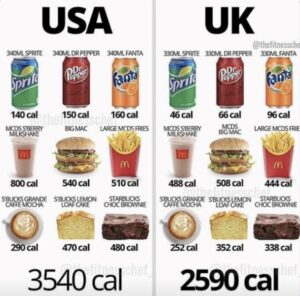
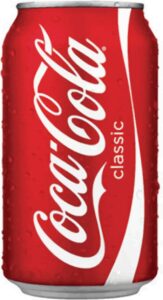
- The companies that sell sugary drinks have seemingly unlimited resources: Coca-Cola’s sales are rising despite price hikes. The Drinks Group has increased the cost of its beverages by up to 24% in some countries. On February 13, 2024, Coca-Cola defied sluggish sales in the rest of the consumer goods sector by reporting better-than-expected revenues in the fourth quarter and year-long volume growth, while continuing to raise prices by a quarter. The beverage giant stated that its net revenues for the year ending in December increased by 6% to 45.8 billion dollars, driven by average price increases of 10%. Despite steep price increases, the volume of beverages sold grew by 2%, reflecting the strong consumer demand for drinks such as Coca-Cola and Sprite. “We are one of the few consumer goods companies that consistently demonstrate our ability to increase both volumes and revenues,” said Chief Financial Officer John Murphy to the Financial Times.
- The Corriere article reveals an open secret: producers of ultra-processed foods (UPF) can easily change their product recipes if pushed by governments, themselves urged by consumers.
In essence, beverage producers can readily absorb the additional costs of reformulating their recipes with less sugar, if we encourage them to do so. Every advancement in favor of consumer health—against cancer, diabetes, and obesity—is simply being blocked by their lobbying.
P.S.: A 12-ounce (33 cl.) can of soft drink contains the equivalent of 7.9 tablespoons of sugar!
The Conflicts of Interest in Scientific Societies
SIMG Onlus (the Italian Society of General Medicine) was funded in 2011 and 2012 by Coca-Cola with 357,000 and 340,000 euros respectively for the Calorie Balance project. No one ever asked, “Why is Coca-Cola donating such large sums to us, and what might all this entail?” When it came time to sign on for the Sugar Tax, SIMG, unsurprisingly, stepped back. Coca-Cola has publicly disclosed the donations made over approximately five years, and we do not know how much money SIMG and other scientific societies may have received before 2010 and after 2015.