
This article captures the situation very well: there is too much confusion over food labels.
That is the conclusion of a report published on November 25 by the European Court of Auditors, which points out that EU consumers are exposed to an ever-increasing number of claims, indications, and logos that make it progressively harder to make informed purchase decisions—instead of being helpful. According to Regulation (EU) No 1169/2011, labels must provide certain mandatory basic information, while health and nutritional claims are regulated by Regulation (EC) No 1924/2006. However, the European Court of Auditors has identified a series of worrying gaps in the legislation, in the controls, and in the sanctions, which can leave room for unfair practices and misleading information. In short, European legislation has not kept pace with the market.
“Instead of clarifying things, food labels often create confusion: there are hundreds of systems, logos, and indications that consumers have to decipher,” stated Keit Pentus-Rosimannus, head of the audit. “Companies can be very creative in what they display on packaging, and EU rules are not keeping up with a rapidly evolving market: about 450 million EU consumers are therefore defenseless against messages that are either deliberately or inadvertently misleading.”
The Court’s investigation, covering the period between 2011 and 2023, was conducted in three European countries—Belgium, Italy, and Lithuania—to ensure geographic balance.
Nutritional and Health Claims
Among the shortcomings identified by the European Court of Auditors is that the legislation permits the use of nutritional and health claims even on products high in fats, sugars, and/or salt. Simply adding vitamins, minerals, fibre, or proteins to unhealthy foods is enough to boast of beneficial properties. This is a consequence of the absence of nutritional profiles to limit the use of such claims. The original regulation foresaw their definition and implementation by 2009, yet 15 years later there is still no trace of it.
Furthermore, consumers are increasingly exposed to unregulated health claims regarding plant-based substances, the so-called botanicals. The EFSA suspended its evaluations of claims related to these substances in 2010; at present, there are over 2,000 such claims. In the absence of an EU-wide list of approved botanical claims, member states have adopted different approaches.
Precautionary Allergen Labelling
Another major issue is allergen labelling and precautionary statements. While companies seek to protect themselves and allergic consumers by including warnings like “may contain…”, the Court of Auditors notes that excessively cautious and vague allergen labelling risks unnecessarily limiting the choices of consumers with food allergies. Meanwhile, vegetarians and vegans face a total lack of regulation, as there is no valid EU-wide definition of “vegan” or “vegetarian.”
Nutri-Score and Other Logos
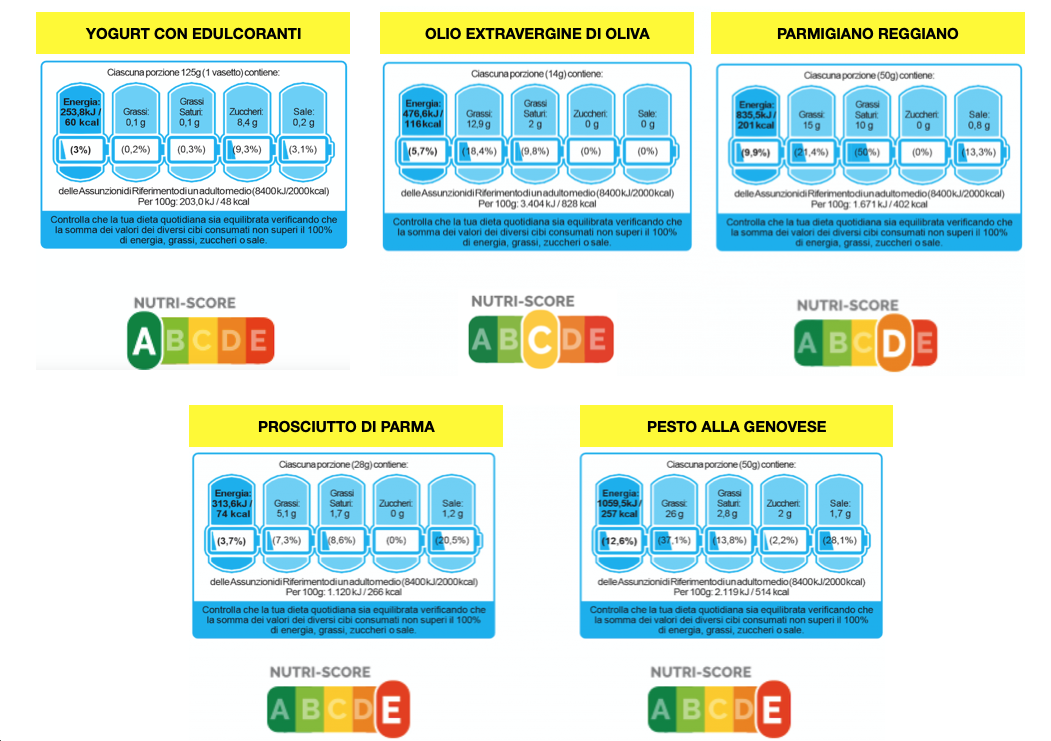
The Court’s investigation also addressed the matter of nutritional labelling. The problem identified here is the presence of multiple labels on the front of packages and the lack of harmonisation. A common labelling proposal was envisaged under the Farm to Fork strategy by the end of 2022, but this too did not materialise. Currently, at least six different systems exist within the EU, including Nutri-Score, NutrInform Battery, and Keyhole. The European Court of Auditors observes that the coexistence of multiple systems—with different purposes and methods of interpretation—can generate confusion among consumers.
The report also highlights the proliferation of voluntary labels, logos, and claims that indicate certain product qualities, often without a shared and regulated definition. This is the case, for example, with the numerous environmental claims that frequently amount to greenwashing. Unfortunately, current European rules are unable to curb these practices.
Gaps in EU and Member State Actions
Despite all these shortcomings and issues, the European Union does not seem particularly interested in informing and educating consumers: between 2021 and 2025, the EU allocated only 5.5 million euros for food labelling awareness campaigns, and consumer information campaigns conducted by member states are sporadic. Controls work well for mandatory information, but are few or non-existent for voluntary information, including nutritional or health claims. The same applies to products sold online, especially those marketed by non-EU companies. Finally, the Court of Auditors believes that the penalties imposed are not always effective or proportionate.
Recommendations of the European Court of Auditors
At the end of the report, the Court makes five recommendations to the European Commission, to be implemented by 2027:
- Address the gaps in the EU’s legal framework on food labelling;
- Increase efforts to analyse labelling practices;
- Monitor consumer expectations and take steps to help them better understand food labels;
- Strengthen member state controls on voluntary labelling and online retail;
- Improve reporting on food labelling.
Below is a practical example of the confusion generated by marketing-driven labelling.