Obesity rates worldwide have doubled over the last 30 years: is there a solution?

Drafted on January 16, updated on February 9, 2025
The rise in chronic diseases is spurring research into ways to improve access to care for millions at risk
Obesity rates worldwide have doubled over the last 30 years
According to an international commission supported by leading medical organizations, the escalating obesity crisis requires a radical rethinking of diagnoses to improve care for patients already affected by the disease. The commission suggests that reclassifying obesity into “preclinical” and “clinical” stages should enhance access to treatment for millions of people who are at a higher risk of developing severe conditions such as irreversible organ damage. The doubling of obesity rates worldwide over 30 years has sparked an urgent search for diagnostic tools better than the numerical body mass index, which provides scant information about the health damage caused by this condition.
The significant increase in obesity has driven up healthcare costs and fueled an enormous demand for weight loss drugs such as Ozempic, Wegovy, and Mounjaro. The rapidly expanding market is expected to reach at least 80 billion dollars in sales by 2030.
However, many obese patients do not receive treatment, such as bariatric surgery, because they do not meet the current criteria based on BMI, said Professor Francesco Rubino, who led the commission’s work on diabetes and endocrinology for The Lancet. “The definition we have of obesity does not fit the spectrum it represents,” Rubino, a specialist in metabolic and bariatric surgery at King’s College London, stated. “I have seen many people who not only struggle with an objectively, sometimes very severe, disease, but very often lack access to care. We are missing a fundamental and crucial piece: a clinical diagnosis and a definition of the disease.” BMI, a calculation based on height and weight, can either underestimate or overestimate body fat, the commission noted in an article published in The Lancet on Tuesday.
For example, a very muscular person might be classified as obese according to BMI simply because of their weight. The commission, which included 58 medical experts, is focusing instead on identifying those who suffer from observable health problems related to obesity rather than merely being at risk for them. It defines clinical obesity as “a chronic and systemic disease characterized by alterations in the functioning of tissues, organs, the entire individual, or a combination thereof,” due to excess body fat.
The commission recommends initially assessing obesity using additional indicative measures such as the waist-to-height ratio or technological tools that measure fat concentration, such as X-rays and electrical impedance responses. Clinical obesity would then be diagnosed based on a set of criteria that includes measurements of respiratory, cardiac, and liver functions. The work was supported by 76 organizations, including scientific societies and patient advocacy groups from the Americas, Europe, Asia, the Middle East, and Africa.
A redefinition of obesity would have potential implications for the use of weight loss drugs. These drugs are expensive to prescribe on a wide scale within national healthcare systems, meaning that some might only offer them based on the perceived degree of necessity. Other scientists have welcomed the commission’s work, although some have pointed out potential limitations, such as the additional financial burden on healthcare systems. These include the cost of advanced diagnostic methods like X-ray scans.
The call for new diagnostic criteria could be challenging to implement for physicians and might also underestimate the impact of obesity on patients’ mental health, said Alexandra Cremona, associate professor of human nutrition and dietetics at the University of Limerick. However, these issues “are not insurmountable,” she added. The commission’s proposals could also be difficult to implement because the codes used to classify diseases for surveillance and payment systems were “entrenched” and hard to modify, said Donna Ryan, professor emerita at the Pennington Biomedical Research Center in the United States. “My concern is that the report raises awareness, fosters discussion, but does not take the next step to provide us with practical solutions,” Ryan commented, noting that she was “trying to be optimistic” about the work. “Perhaps it could be the next project.”
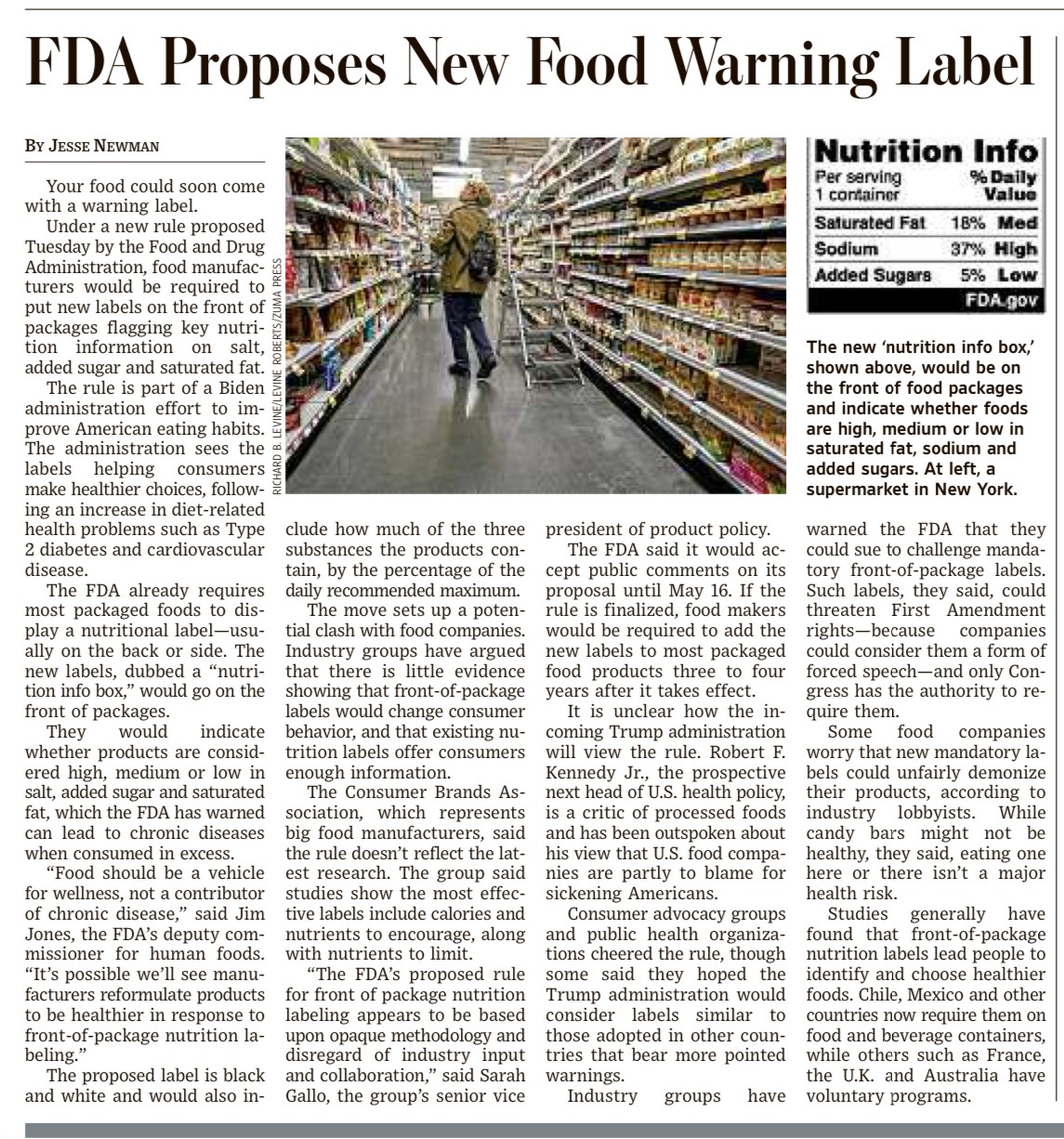
But if in the past all the signals from the Anglophone world on the subject were negative (e.g., in the USA obesity kills more than guns), now it appears that something is finally “moving”: Yesterday’s news that the Food and Drug Administration intends to place labels on packaged foods warning of added salt, sugar, and saturated fats.
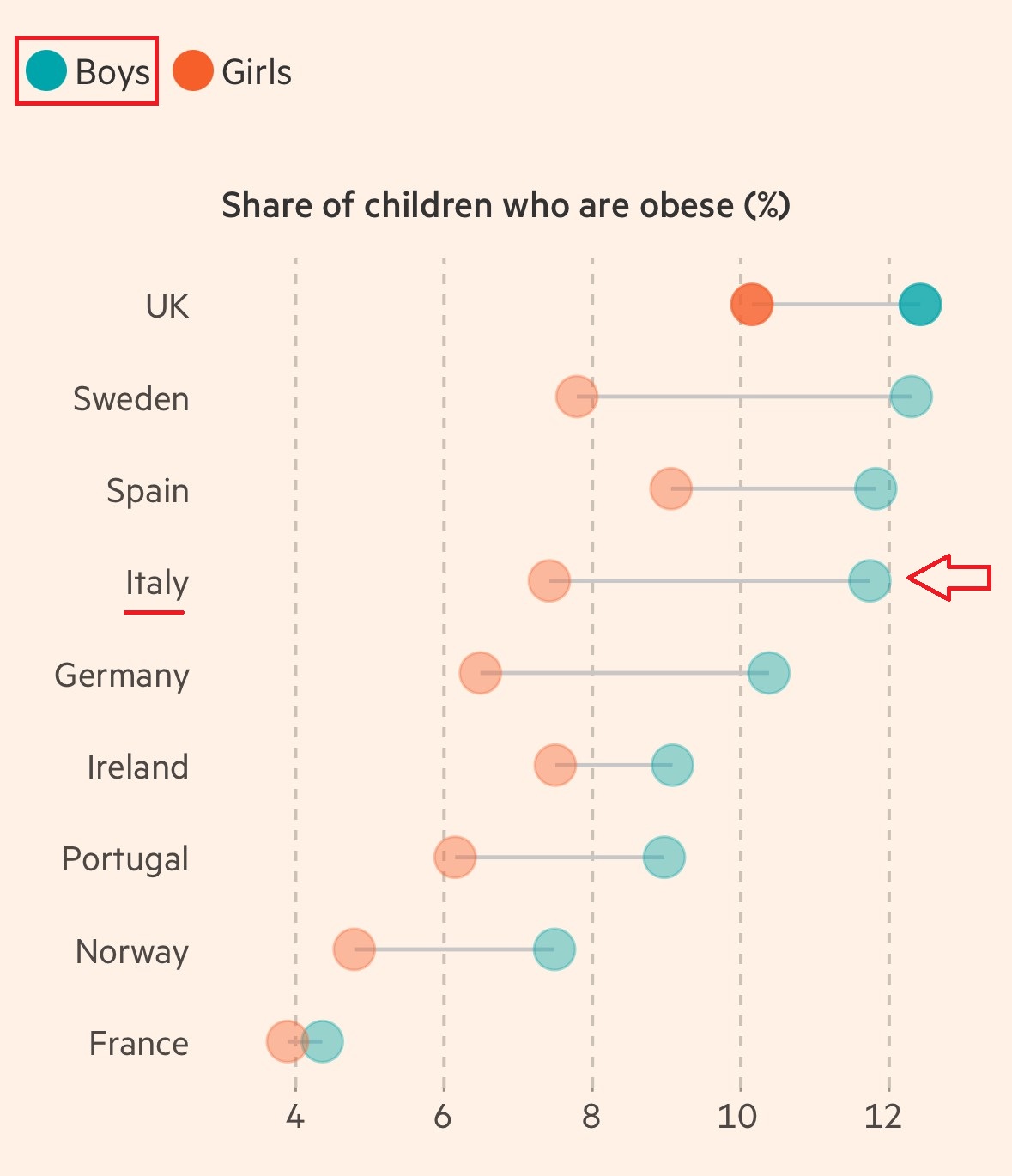
And this is also an excellent signal for Europe, which has been struggling to find its way on the issue, especially since all European countries have high rates of childhood obesity, particularly among males.
Unfortunately, Italy has a similar rate of childhood obesity to that of Great Britain, which is sadly known as the home of junk food.
For further reading on this topic, check out: “ Deny, Denounce, Delay”: the battle over the risk of ultra-processed foods.