
The Second Life: The National Association for Cancer Research (AIRC) – Part two
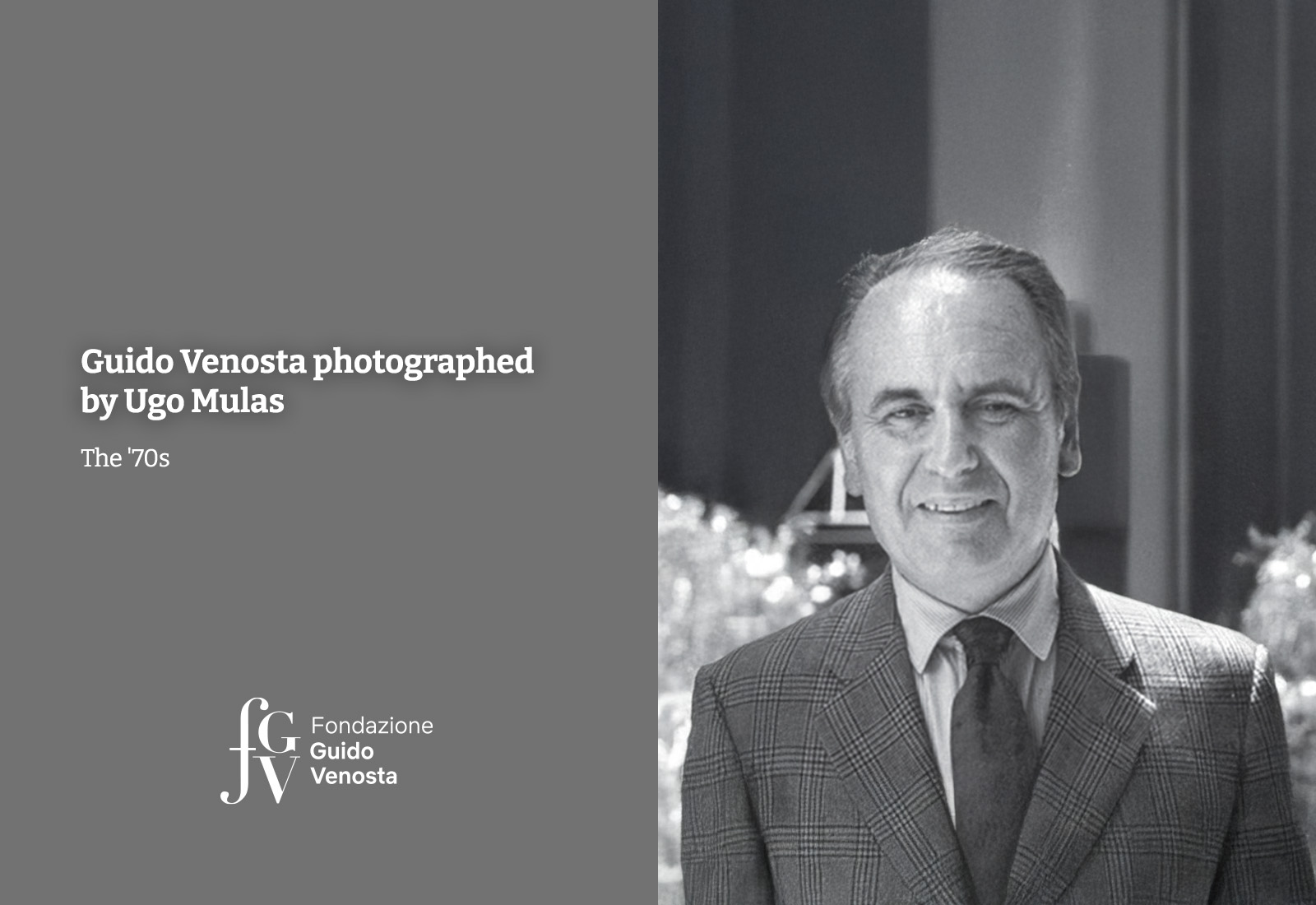
Initially composed of only three people—one handling the accounting, one taking care of the “initial organizational procedures,” and Guido Venosta himself dedicated to “defining the first strategies and the initial operational marketing guidelines”—within about a decade, thanks both to his own work and to favorable economic, social, and cultural circumstances, AIRC succeeded and grew. In 1975, Venosta was elected President, a role he held for twenty years, during which he devised innovative tools and structured the organization at a managerial level that was then unique in the field of solidarity.
Of particular significance was the creation of the AIRC Regional Committees, which he designed to ensure a real presence of the Association throughout Italy. The actions of the Regional Committees—whether acting autonomously or as part of large national initiatives—accounted for roughly two-thirds of AIRC’s fundraising, enabling, among other things, the establishment of two highly successful initiatives: “L’Azalea della Ricerca” (with its first edition in 1984) and “Le Arance della Salute” (from 1990), both of which continue today on an annual basis with great public success.
During Venosta’s presidency (data as of 1997), AIRC reached 1,400,000 members—the highest in Italy among nonprofit organizations—contributed 285 billion lire to Italian oncological research (covering over 45% of the total amount allocated), and granted 2,507 scholarships totaling more than 25 billion lire (utilized both in Italy and abroad).
In parallel with AIRC, in 1982 Venosta founded the Italian Foundation for Cancer Research (FIRC), promoted as an asset-holding entity alongside AIRC with the aim of ensuring, beyond the financial flow derived from membership fees, the future of oncological research, and he became its president.
In that capacity, he promoted and implemented, among other major initiatives:
- The establishment of FIRC Research Units (the first initiative of its kind in Italy), which are scientific clusters working on specific advanced oncological themes, established and directly funded by the Foundation within the country’s leading research centers;
- The creation of the biennial “Guido Venosta Award,” reserved for young Italian researchers who have particularly distinguished themselves in developing new therapeutic approaches to neoplasms, a strong signal intended to draw public attention to the tangible results of research;
- A ten-year donation to the University of Milan for the establishment of a chair in Medical Oncology, marking the first private contribution to an Italian university for the implementation of an integrated, top-level academic program.
By the late 1990s, the FIRC assets amassed over the fifteen years of Venosta’s presidency were valued at around 100 billion lire.
After stepping down from his executive role at AIRC in 1994 and at FIRC in 1996, Guido Venosta remained Honorary President of both organizations until his death.
For many years, he also served as a board member of the National Tumor Institute and as a member of the Board of the European Institute of Oncology.
Guido Venosta died in Milan on February 4, 1998. His name is commemorated on a tombstone placed in the Famedio of the Monumental Cemetery of Milan—a “place of burial, celebration, and remembrance for Milanese, by birth or by adoption (…) who, through their deeds and actions, have made the city and Italy illustrious”—and on a street in the Bicocca area of the city, which was named in his honor in 2003. In both cases, he is remembered as a “pioneer of the nonprofit sector.”
Furthermore, his commitment and achievements were recognized with several awards, including his appointment as Grand Officer of the Italian Republic (1988), the Municipal Gold Medal of Civic Merit (“Ambrogino d’Oro”) of Milan (1989), the Gold Medal of the Ministry of Health for Civil Merits (1990), and the Fecs – Pezcoller Recognition Award for his contribution to oncology (1994).
An extraordinary man, Guido Venosta was a true knight who faced every obstacle—whether on the hunting grounds, over hurdles atop a noble steed, or by carrying a great banner on a rearing horse—as depicted by the artist Guido Somarè, a long-time companion of his daughter Giorgina, in an engraving serving as a small, delightful keepsake that Venosta kept framed on his desk.
Sources:
G.VENOSTA, “Unpublished Memoirs”, 1997–1998.
Albiate (MB), Villa San Valerio, Villa San Valerio Archives, Guido Venosta Archive; AIRC/FIRC Archive.
Bibliography:
G. VENOSTA, Dal profit al nonprofit. Storia di un’esperienza, Milan, 1997.