
Giuseppe Caprotti’s Social Commitment at Esselunga: Caring for the Environment, for People
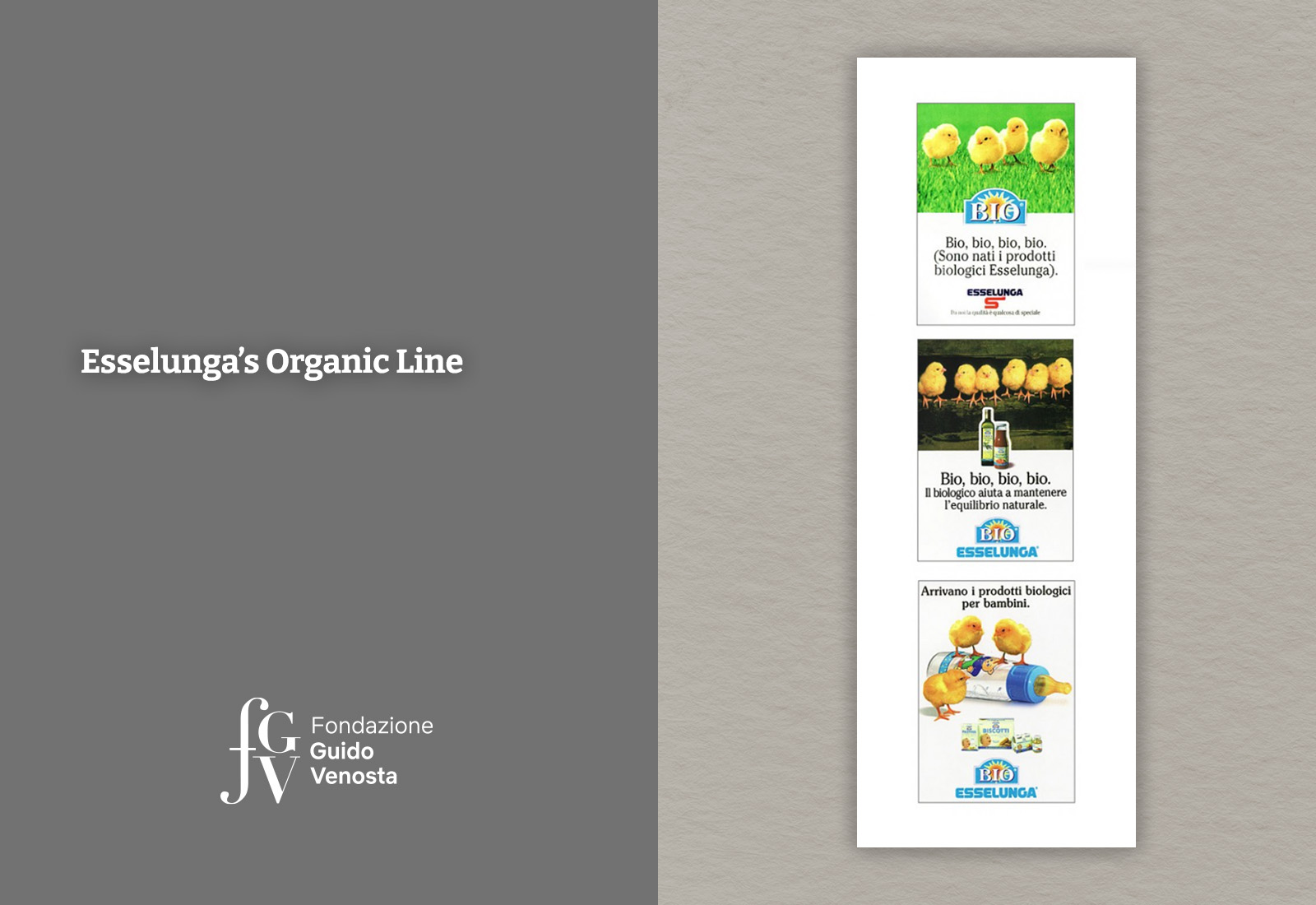
The project focused on environmental care dates back to the 1980s, the first years I spent at Esselunga, and it began with organic and natural products in general. It is also the project I am most attached to because it had a soul, a social purpose, beyond its business goals.
The idea was that Esselunga, representing a model of entrepreneurial and commercial excellence in the Italian landscape, could also excel from an environmental and social perspective.
I remember a conversation in the kitchen on Via del Lauro about the amount of pesticides in strawberries. It was 1987, before I left for the United States. I wanted to create lines of “natural” products; my father Bernardo was less enthusiastic. Back then, I didn’t have an environmental reference point; I simply followed my instincts.
In the 1990s, I developed my ideas and program in close contact with ethologist Danilo Mainardi (Lipu), listening to and reading Lester R. Brown (author of State of the World, Italian edition edited by Gianfranco Bologna), Fulco Pratesi, with whom we launched joint operations between WWF-Esselunga, and Enrico Albertini, with whom we organized an operation for the forests of Gabon, with Trust the Forest, managed by Gustavo Gandini.
The continuous food crises of those years, from BSE (“mad cow disease”) to dioxin-contaminated chicken, helped me introduce integrated pest management products, and later organic products, into Esselunga’s assortment.
In the early 1990s, organic agriculture products were introduced and highlighted on the shelves with supplier labels.
This was the start of a journey lasting approximately 12 years: after organic agricultural products, we moved on to launching “Naturama” products (1995) and introducing fair trade products from Altromercato (1998), followed by “Esselunga Bio” products, the first Ecolabel products “For Nature Lovers” (2001), and finally the fair trade “Esselunga Bio” products (2002), achieving 10% of Esselunga’s food sales, equivalent to about €300 million in 2003.
The launch of Esselunga Bio, in just seven months, was certainly the most important adventure. It was born during a long car trip in February 1999, where, in addition to myself, who was then the commercial director, and Gaetano Puglisi, we had the director of quality assurance Claudio Arnoldi and the senior buyer of the food sector, Alberto Bianchi.
The marketing idea was to cover all market segments: the lower one with entry-level prices (at that time, there was the Fidel brand), the middle range with Esselunga and Naturama, and the high-end with Esselunga Bio.
Naturama and Bio products also had the merit of reassuring customers worried about the decline in food quality, increasingly aware of the fact that “we are what we eat.”
Obviously, there were also other motivations: through the sale of certain products and explaining why they were being sold, we tried to stimulate and build awareness: the condition of the Earth, from the planet itself to the micro-system in which the customer lived, was poor because exploitation was too intense and was causing immeasurable ecological and economic damage, widening the gap between wealth and poverty—not only in poorer countries.
In practice, these years saw the birth of what would become Esselunga’s formal commitment to the planet, nature, people, and culture, as outlined in the essential Social Balance of 2003, which stated that the company’s mission is to believe “in sustainable development, understood as the integration of environment, social equity, and economic growth.”
These same principles led to a deep innovation in relations with staff, suppliers, and customers: the pamphlet Values and Principles, created with the company staff (2002 and 2003), made it clear how both internal and external people (customers) are the founding values of the company. By integrating and collaborating with a common goal, following rules of care for oneself, others, and the environment, they would achieve a positive result from their commitment, in line with the golden rule formulated by C.M. Cipolla in his Allegro ma non troppo: if a person performs an action that benefits them while also benefiting others (and, now, also the environment), they act as an intelligent person.
Bibliography:
G. CAPROTTI, Le ossa dei Caprotti, Una storia italiana, Milano 2024/3.
ID., Esselunga Bio, ovverosia “l’avventura del biologico”, 14/12/2023.
Esselunga Bio, “l’avventura del biologico” 2, 09/01/2024
ID., “Le ossa dei Caprotti”. La marca: “Esselunga Bio”, 1999. Spunti dal libro.
C.M. CIPOLLA, Allegro ma non troppo, Bologna 1988.