Is the widespread contamination of drinking water reported in France likely to be occurring in Italy as well?
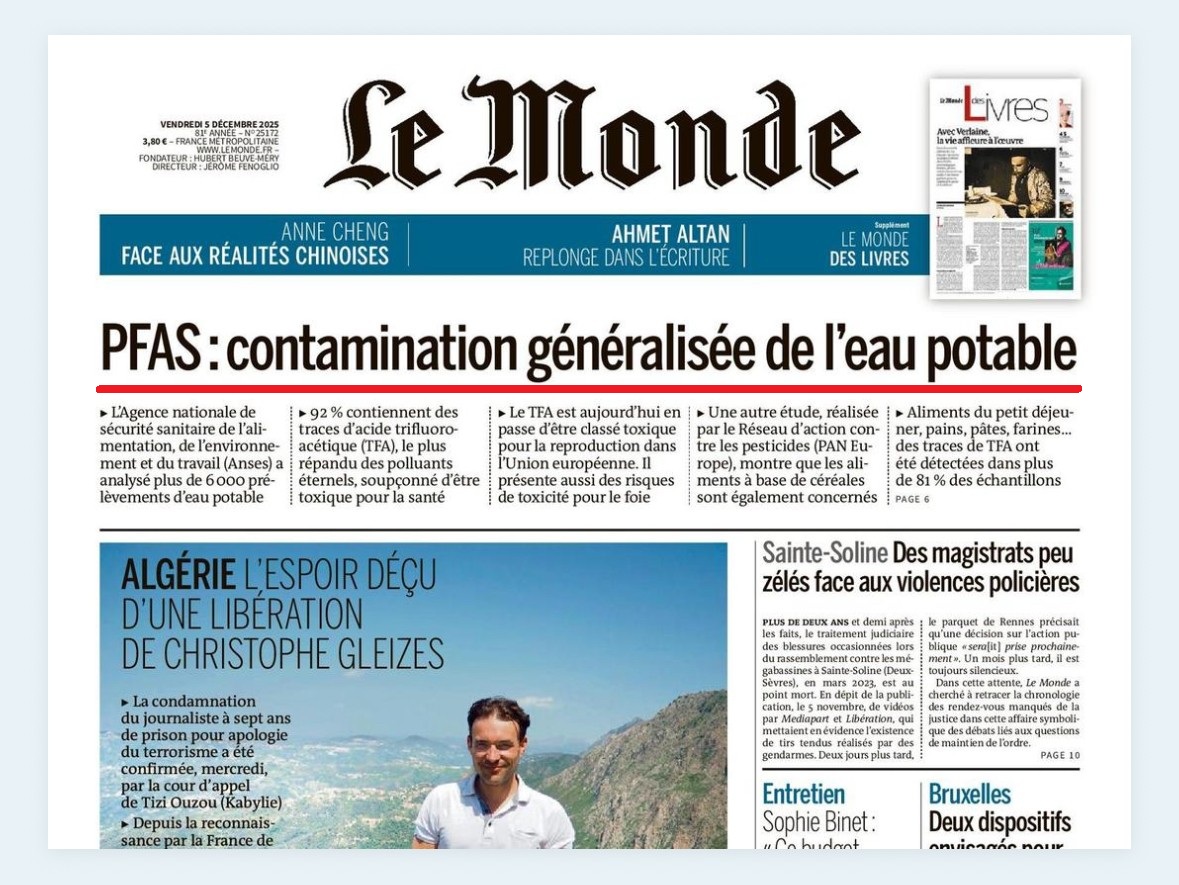
Below is an excerpt from an article on PFAS that recently made the front page of Le Monde in France.
ANSES analyzed more than 600 drinking water samples across the country: 92% contained traces of trifluoroacetic acid (TFA), the smallest of the PFAS compounds, suspected of being toxic to human health.
By Stéphane Foucart and Stéphane Mandard
A new warning has been issued regarding the quality of drinking water in France. Following reports from non-governmental organizations (NGOs), the French Agency for Food, Environmental and Occupational Health & Safety (ANSES) revealed widespread contamination of French drinking water by trifluoroacetic acid (TFA), the most prevalent of the persistent pollutants, in a report published on Wednesday, December 3. This PFAS, the smallest of the per- and polyfluoroalkyl substances, was found in more than 92% of tap water samples collected as part of the largest national assessment campaign ever conducted by ANSES.
Between 2023 and 2025, more than 600 tap water samples and an equal number of raw water samples (drinking water prior to treatment) were analyzed. These samples were drawn from watersheds across the country, representing approximately 20% of the water distributed in France. The ANSES campaign did not include bottled water: analyses conducted in 2024 by the Pesticide Action Network Europe showed that mineral waters were also contaminated with TFA.
By accumulating in the environment, TFA poses a growing threat to public health: it is now on track to be classified as toxic for reproduction within the European Union (EU) and has also shown signs of liver toxicity.
The results of the detection campaign conducted in France on drinking water (which accounts for approximately 20% of PFAS exposure) show an average TFA concentration slightly above 1,000 nanograms per liter (ng/L), with a maximum value of 25,000 ng/L in a water sample taken from a drinking water treatment plant located downstream of a TFA production facility, demonstrating the current ineffectiveness of treatment processes.
Until now, the French record stood at 13,000 ng/L for a sample taken from the tap water in the town of Moussac (Gard), located near a Solvay Group facility that produced TFA until September 2024. “I have never seen such levels of TFA concentration in drinking water,” comments environmental chemist Hans Peter Arp, one of the world’s leading experts on TFA. “And these concentrations will continue to rise due to the expected increase in TFA precursor concentrations [fluorinated gases, pesticides, etc.] in ecosystems.”
A metabolite of several pesticides
However, ANSES notes that TFA concentrations remain below the “health-based guidance value” adopted by the Directorate-General for Health, pending clarification of European regulations.
In a low-profile note published on December 23, 2024, the French Directorate-General for Health aligned itself with the German provisional value of 60,000 ng/L, below which the risk is presumed to be zero. Nevertheless, health authorities maintain “a reduction trajectory toward a concentration below 10 micrograms per liter [i.e., 10,000 ng/L].” Two samples collected during the ANSES campaign showed concentrations exceeding this 10,000 ng/L target value. Other countries, such as the Netherlands, have adopted a health-based value nearly five times lower: 2,200 ng/L.
These indicative and provisional values will be harmonized once the European Food Safety Authority (EFSA) establishes a reference value, namely a tolerable daily intake of TFA from all sources of exposure. Its conclusions were expected by the end of the year but have been postponed to July 2026.
… All samples collected by ANSES exceeded on average by tenfold the regulatory threshold of 100 ng/L. This means that tap water would have to be declared “non-compliant” for the vast majority of the French population if TFA were considered a relevant pesticide metabolite. Furthermore, the ANSES analytical campaign reveals the unique nature of TFA: its presence is not statistically associated with that of other PFAS. This characteristic suggests other environmental contamination pathways, such as atmospheric deposition, notes Xavier Dauchy (Nancy Hydrology Laboratory), who co-directed the analytical campaign.
On the front page of Le Monde, whose main headline concerned PFAS, it was also reported that these substances are present not only in water but also in food, particularly wheat-based products. As mentioned above—and worth reiterating—PFAS (TFA) have also been detected in mineral waters.
“Polluter Pays” Tax Postponed
One hundred nanograms per liter is also the threshold that will apply from 2026 to the sum of the 20 PFAS considered “priority” in the EU, although TFA is not included among them. The exploratory campaign conducted by ANSES revealed the presence of 11 of these 20 persistent pollutants. Among the most frequently detected (19% of samples) is PFOS, classified as “possibly carcinogenic” by the International Agency for Research on Cancer. For a small number of samples (nine), concentrations exceeded the regulatory limit of 100 ng/L. This percentage rises to nearly 17% (106 samples) if reference is made to the indicative value adopted by EFSA for the sum of the four molecules considered most toxic (PFOS, PFOA, PFNA and PFHxS), set at 4 ng/L.
In addition to TFA and the 20 “priority” PFAS listed in the European directive, the ANSES campaign identified other persistent pollutants in tap water. For the first time in France, health authorities detected a “significant presence” of TFMSA (trifluoromethanesulfonic acid) in 13% of samples, with an average concentration of 28.5 ng/L and a maximum of 4,900 ng/L. Like TFA, it is an ultra-short-chain PFAS, meaning molecules with one or three carbon atoms. ANSES proposes including it in a long-term water monitoring program.
In a general assessment published in October, the health authority reiterated the priority of “reducing PFAS emissions at the source.” A key measure of the PFAS law approved in February—a “polluter pays” tax—was supposed to be applied from the end of the year to incentivize industries to cease PFAS discharges into water. During the examination of the budget bill, senators, following the example of the National Assembly, postponed its implementation until 2027. “This vote protects industry rather than drinking water,” lamented Member of Parliament Nicolas Thierry (Gironde, The Greens), author of the PFAS law. “By postponing the PFAS tax by one year, right-wing senators are turning their backs on municipalities, which will have to remediate pollution without resources, and are giving a gift to major polluters.” The cost of pollution remediation in France has been estimated at €12 billion per year by Le Monde and its partners as part of the Forever Lobbying Project investigation.
Below: PFAS pollution in Lombardy (2023).
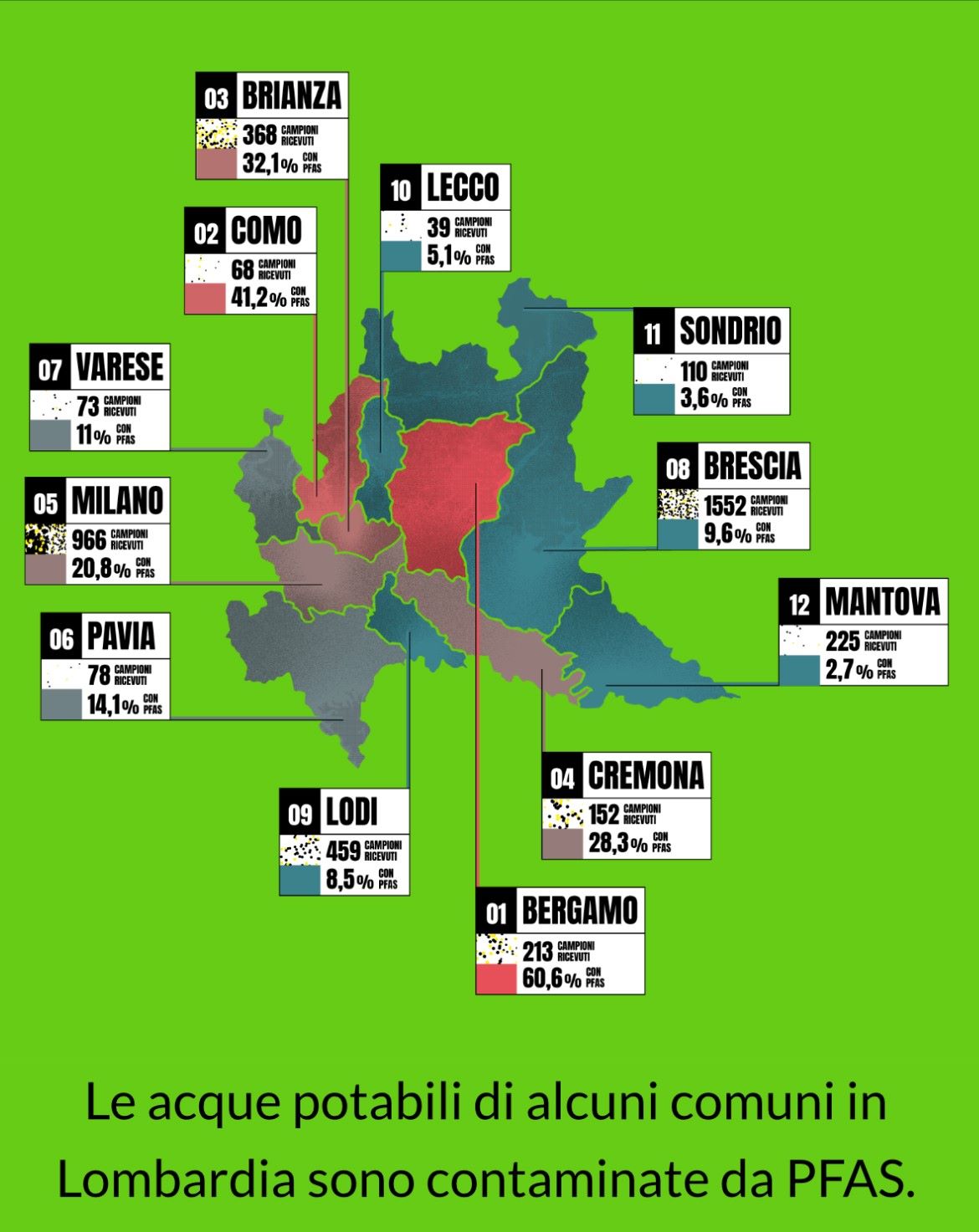
Contamination of Italian waters is therefore highly likely, as has already been observed.
On July 29, 2025, Legislative Decree No. 102 of June 19, 2025, published in the Official Gazette on July 4, entered into force. The measure significantly updates the rules governing the quality of water intended for human consumption, replacing the previous 2023 decree and introducing changes affecting both water utilities and citizens.
PFAS and TFA: New Limits for Drinking Water
One of the most anticipated measures concerns chemical contaminants. The permitted total concentration of PFAS in drinking water is reduced from 0.50 µg/L to 0.10 µg/L, with mandatory compliance starting January 12, 2026. For the first time, a specific limit for TFA (trifluoroacetic acid) is also introduced, set at 10 µg/L, which will become binding from January 12, 2027. These parameters are particularly relevant to public health, given concerns about the environmental persistence of these substances.
The decree strengthens transparency obligations for water utilities. Every citizen will have the right to easily access, including online, up-to-date information on the operator responsible for their area, the treatment and disinfection methods used, the most recent monitoring results—including parameter values and monitoring frequency—data on network losses, tariff structures and complaints received.
All this information will be integrated into the digital platform AnTeA (National Territorial Water Registry), a tool designed to ensure simple and transparent access to data on drinking water quality.
Naturally, new obligations will also apply to condominium associations and property managers.
The question remains: will we be able to move from words—even those enshrined in legislation—to concrete action?
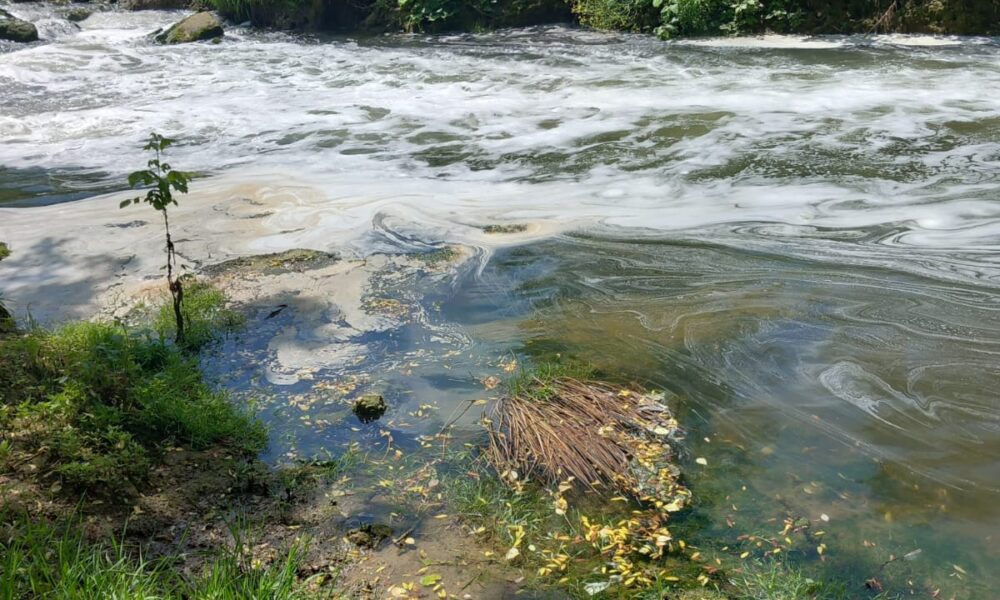
Below: the polluted Bormida River.
France – PFAS contamination in drinking water.