Environment and Lifestyles: The Hidden Burden in Onco-Hematological Risk
Regarding the volume The Impact of Environment and Lifestyles on Onco-Hematological Risk, promoted by the Italian Association against Leukemia, Lymphoma and Myeloma (AIL) and published in the series Wellbeing, Environment and Health.
Rising Incidence, Delayed Prevention
In Italy, an estimated 395,000 new cancer diagnoses were recorded in 2023, while more than 3.5 million people are living after a cancer diagnosis. This reflects the success of modern therapies, but also increased exposure to avoidable risk factors. As highlighted in the volume, the decline in mortality has not been matched by a comparable reduction in incidence, resulting in rising costs for families and for the National Health Service.
According to the authors, strengthening primary prevention is now a priority not only from a healthcare perspective, but also socially and economically.
The Environment as a Determinant of Health
The volume devotes significant attention to the role of environmental pollution. The scientific evidence cited indicates that chronic exposure to atmospheric particulate matter (PM2.5 and PM10), nitrogen dioxide (NO₂) and other urban pollutants contributes to an increased risk of leukemia and other hematological diseases, particularly in densely populated areas.
Alongside “traditional” pollutants, new threats are emerging, such as PFAS — persistent and bioaccumulative substances now recognised as one of the most insidious health challenges for present and future generations. The publication stresses the need for emission reduction policies, remediation of contaminated sites, biomonitoring programmes and strict application of the precautionary principle.
Lifestyles, Inequality and Health Risk
The book also highlights how unhealthy lifestyles — smoking, physical inactivity, poor diet and obesity — interact with environmental factors in shaping onco-hematological risk. However, these behaviours are not merely individual choices: they are strongly influenced by social inequalities, economic crises and the urban conditions in which people live.
Economic and environmental crises tend to reduce physical activity, worsen dietary quality and limit access to healthcare, exacerbating existing vulnerabilities and widening health disparities among social groups.
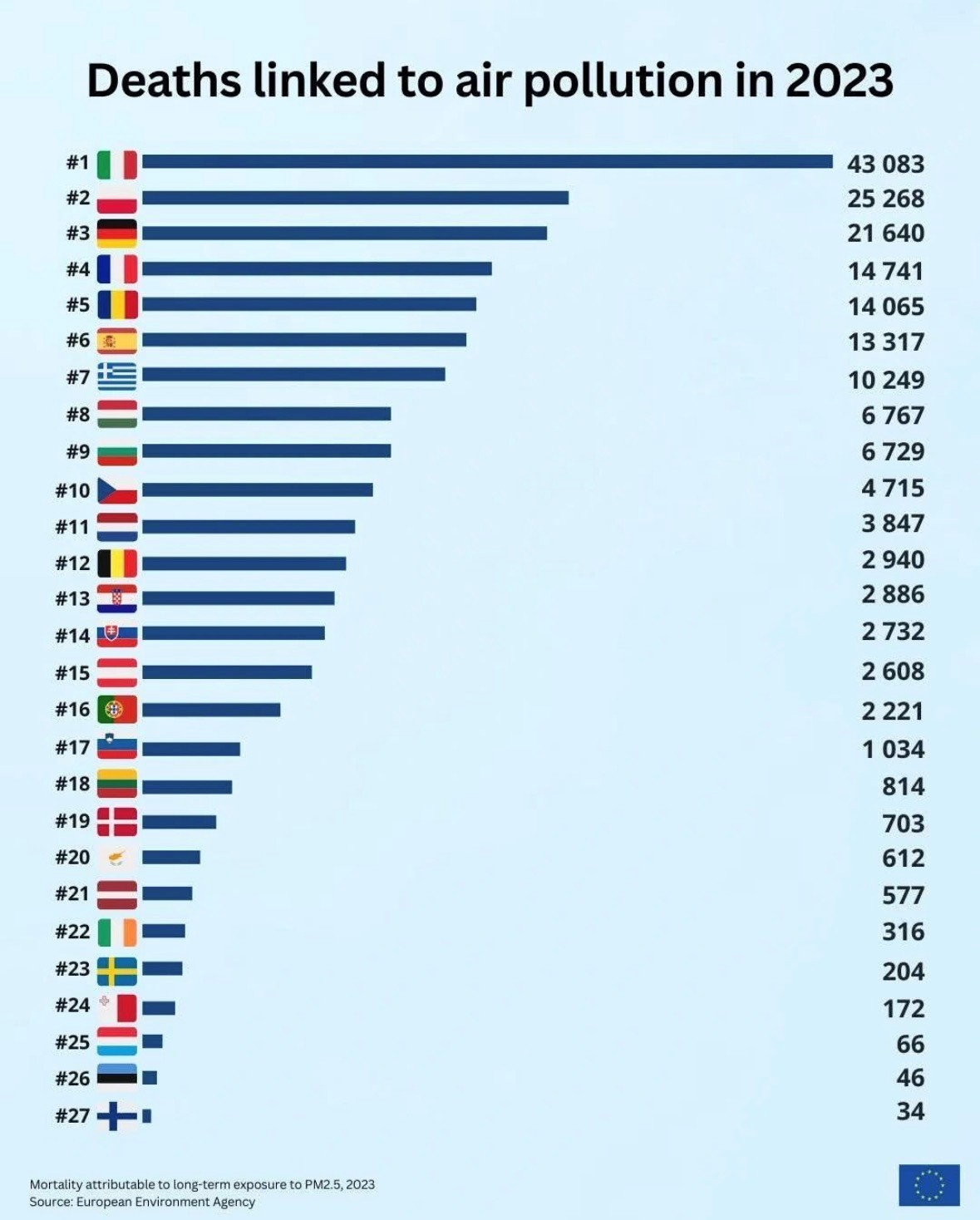
Below: Italy has the highest mortality from pollution in Europe.