Ultra-processed foods, or UPFs, are industrial products that undergo very high levels of processing. Widespread on a global scale, they include carbonated and soft drinks, confectionery, fast food, snacks, as well as mass-produced biscuits, cakes, bread and cereals, ready meals and desserts.
They contain additives and artificial flavourings. Common ingredients include maltodextrin, dextrose, hydrogenated oils, isolated proteins, gluten and numerous additives such as colourings, thickeners and monosodium glutamate.
In general, all food products with a long list of ingredients should be considered “ultra-processed” or “ultra-refined”. A product containing more than five ingredients can already be viewed as falling into this category.
According to the study, these foods tend to contain high levels of salt, sugar, fats and additives associated with obesity, cancer, type 2 diabetes and cardiovascular disease. They also contain lower levels of essential nutrients and may have negative effects on the gut microbiota, factors that contribute to the association between UPF consumption and poorer health outcomes.
A recent study by IRCCS Neuromed, funded by the AIRC Foundation for Cancer Research, links high consumption of ultra-processed foods to increased mortality among people diagnosed with cancer. One of the possible mechanisms involved may be the alteration of the gut microbiota.
Products designed to encourage consumption
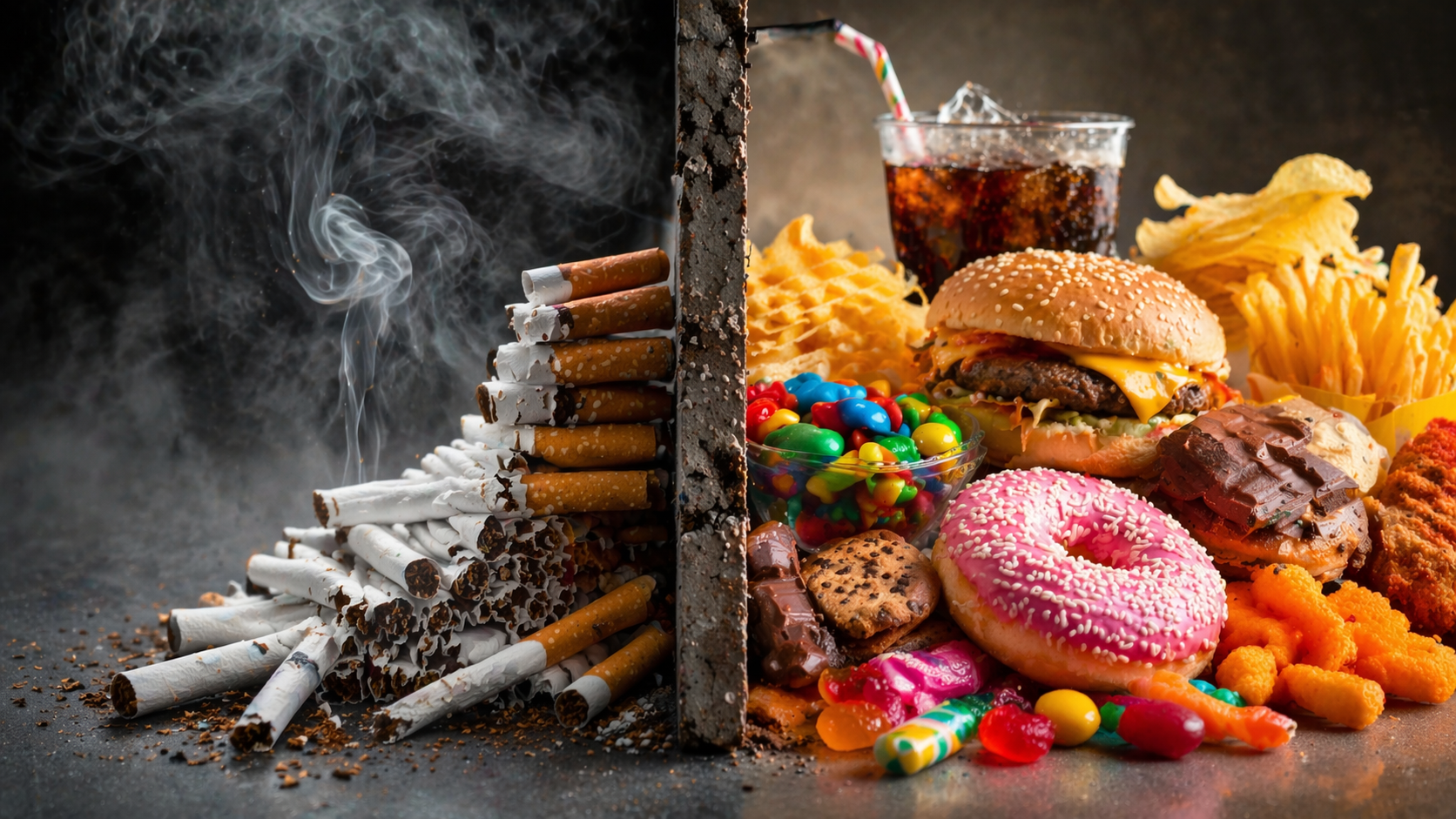
The authors of a study conducted by researchers from Harvard, the University of Michigan and Duke University highlight how many ultra-processed foods show similarities with cigarettes in their production processes. Both cigarettes and ultra-processed foods are designed to deliver precise doses of reinforcing substances, capable of generating pleasurable effects without becoming excessive. In the case of UPFs, this is achieved through the modulation of refined carbohydrates and fats, as reported by The Guardian.
One aspect to consider when assessing the potential for addiction is the speed with which a product releases its rewarding ingredients. The more rapidly these substances reach the brain, the stronger their effect on the reward circuits.
Just as nicotine reaches the brain within seconds, UPFs are formulated to promote rapid absorption, thanks to the breakdown of the food matrix and the use of additives. This makes foods softer, easier to consume and quicker to digest, unlike minimally processed foods, where fibre, protein and water can slow digestion and absorption.
The role of marketing and health washing
The study also highlights the role of marketing strategies. Claims such as “low fat” or “sugar-free” are described as forms of “health washing” that may hinder regulatory action.
A parallel is drawn with filtered cigarettes in the 1950s, which were promoted as safer despite offering limited concrete benefits.
One possible starting point could be a sugar tax, as Germany is doing and China is considering.
We have said it before and we repeat it: such a tax would also be useful in Italy. George Osborne’s sugar tax in the United Kingdom, which came into force in 2018, proved successful not because it changed consumer decision-making, but because its announcement prompted the reformulation of soft drinks, as reported by the Financial Times.
The industry will not spontaneously change recipes, promotions or portion sizes. Taxation or regulation is required.
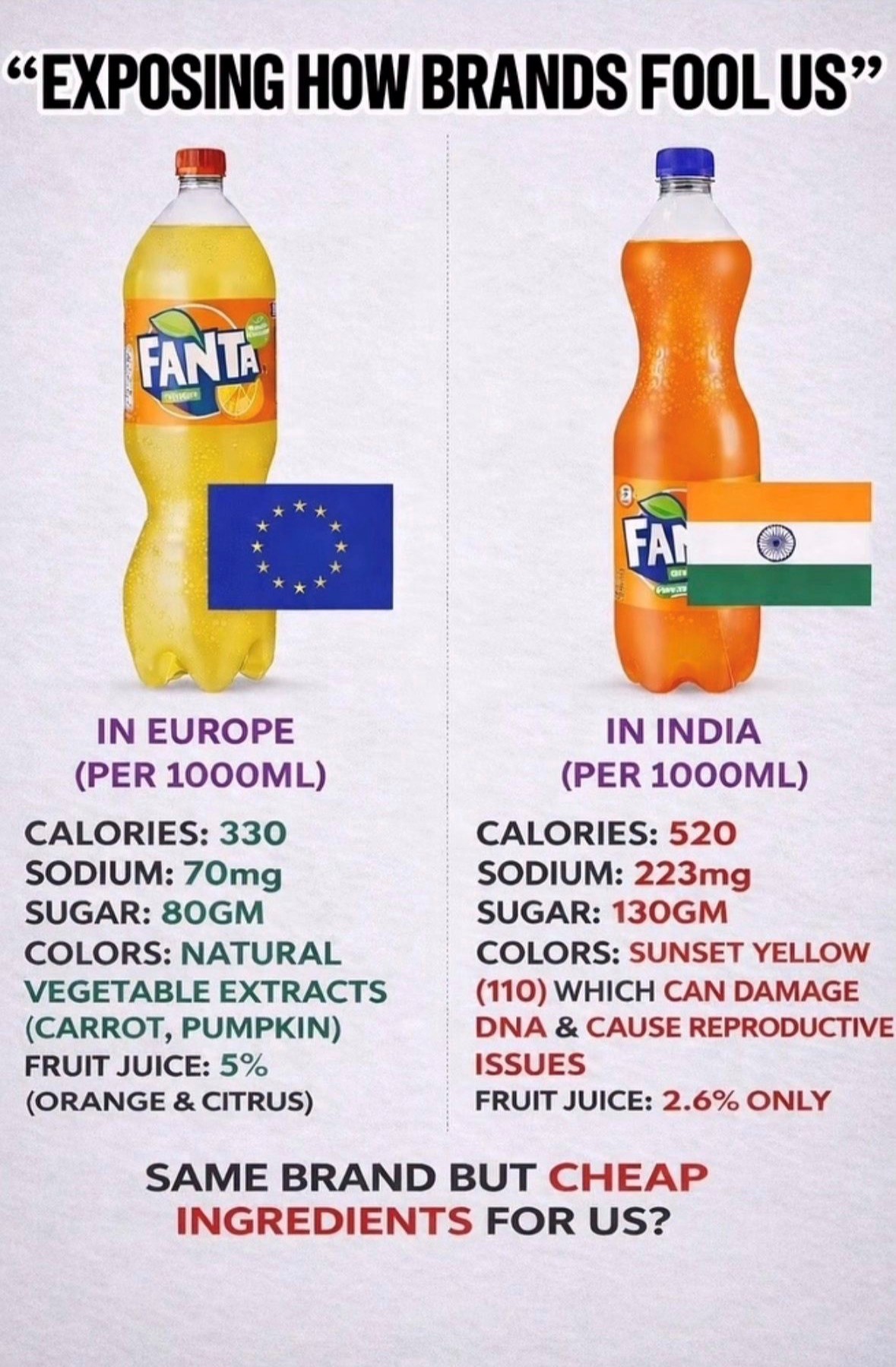
Below: a comparison between different formulations of the same product. When legislation is more attentive, as in the European Union, consumers receive stronger protection.