
Cities are often perceived as the opposite of nature. In reality, they too function as complex ecosystems. The presence or absence of urban biodiversity — made up of trees, living soils, ecological corridors and natural water systems — directly affects the way a city regulates temperature, absorbs rainwater and responds to extreme climate events. When this ecological network is reduced or disappears, cities become more exposed and vulnerable.
Global urbanization will continue to increase over the coming decades. According to the United Nations, by 2050 around 68% of the world’s population will live in urban areas. Cities’ ability to cope with climate crises will increasingly depend on how effectively they are able to integrate nature and infrastructure.
In recent years, scientific research has begun to describe this approach through the concept of urban green infrastructure: the set of natural infrastructures integrated into urban space. Trees, parks, green roofs, ecological corridors and permeable soils do not merely serve a landscape function; they generate essential ecosystem services, including urban cooling, pollution reduction, stormwater management and improved quality of life.
Trees and the urban microclimate
One of the most immediate effects of urban biodiversity concerns the microclimate of cities. Trees and vegetation reduce temperatures through two main mechanisms: shade and the release of water vapour by plants, which helps cool the air.
In recent years, the issue of urban heat islands has become central to the debate on resilient cities. Densely built urban areas can record much higher temperatures than surrounding areas, with significant effects on public health, energy consumption and quality of life.
Several studies show that increasing urban greenery can significantly reduce these temperatures. An analysis published in Nature Communications in 2024 indicates that urban green infrastructure reduces city surface temperatures by an average of around 2.9°C, with higher reductions in areas with greater vegetation cover.
Other more recent studies show that areas with denser tree cover can experience reductions in perceived temperature of up to around 5–5.5°C compared with urban surfaces without trees.
Urban heat islands are among the most significant environmental risks for contemporary cities: asphalt surfaces, buildings and traffic retain heat, increasing temperatures compared with surrounding rural areas. Integrating trees, parks and green corridors therefore becomes a key tool for urban climate adaptation.
The effects are not only environmental, but also health-related. Heatwaves increase the risk of mortality among frail people and those with pre-existing conditions by up to 12%. The presence of trees in cities helps mitigate these effects by reducing urban temperatures and improving residents’ wellbeing.
Water and urban rainwater management
A second key element of urban biodiversity concerns water. Urban rivers, wetlands, renaturalized canals and permeable soils play an increasingly important role in managing intense rainfall events associated with climate change.
In highly impermeable cities, rainwater runs quickly over asphalt and concrete, overloading sewage systems and increasing the risk of flooding. The integration of green and blue infrastructure — such as natural retention basins, floodable parks and permeable surfaces — makes it possible to slow water runoff, reducing pressure on urban systems and lowering hydraulic risk.
Scientific literature defines these solutions as blue-green infrastructure: integrated systems of vegetation and water that increase urban resilience. In addition to managing rainfall, these spaces help cool the urban environment, improve water quality and create habitats for numerous species.
More and more cities are experimenting with this approach. In the Netherlands, for example, the Room for the Riverstrategy gives space back to rivers, allowing them to expand in a controlled way during floods. In Rotterdam, meanwhile, some urban parks are designed to temporarily become water collection basins during heavy rainfall.
Ecological corridors and biodiversity continuity
A third, often overlooked element concerns ecological corridors: the connections between green areas that allow biodiversity to move through the city.
Isolated parks, when not connected to one another, function as “ecological islands” that are unable to support genuine biological diversity. When green areas are connected through rows of trees, green avenues, riverbanks or park networks, they create a continuous structure that allows insects, birds and small mammals to move, reproduce and survive.
This ecological network also improves the overall functioning of the city: it supports urban ventilation, distributes the cooling effect generated by green areas and increases the resilience of urban ecosystems.
For this reason, many contemporary urban strategies do not simply focus on planting new trees, but on designing connected green networks capable of crossing the entire urban fabric and linking suburbs, parks and waterways.
Several urban projects are applying this approach. Singapore, for example, has developed the Park Connector Network, a network stretching over 380 kilometres that connects parks, nature reserves and urban neighbourhoods, creating genuine ecological corridors within the city.
In London, the East London Green Grid project aims to connect parks, waterways and natural areas across the metropolitan area into a continuous network of green infrastructure. In Turin, the Corona Verde project seeks to create a major ecological infrastructure around the Turin metropolitan area.
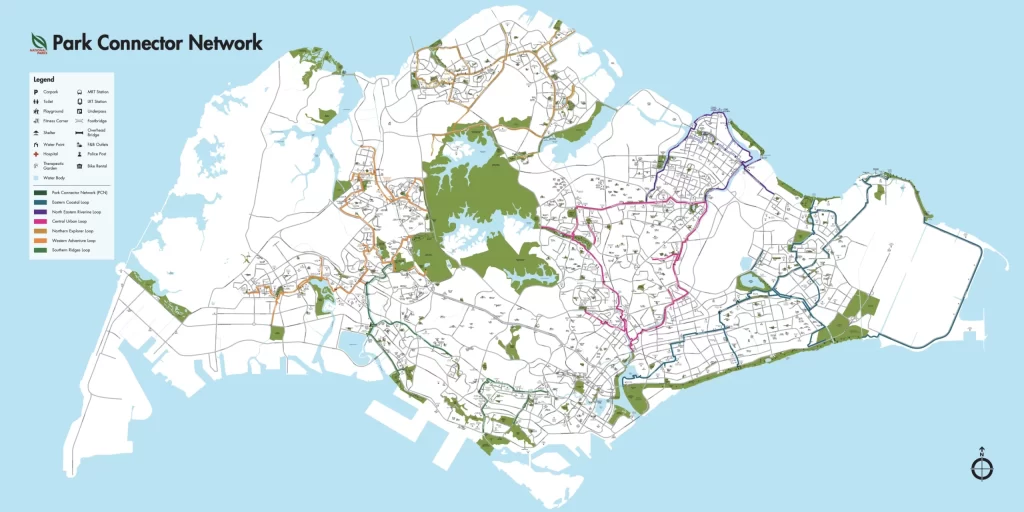
Fonte: https://pcn.nparks.gov.sg/the-pcn-experience/pcnloops/
Cities investing in biodiversity
In recent years, several cities have begun to treat urban biodiversity as a true strategic infrastructure. Singapore is one of the most frequently cited examples: through its City in a Garden model, it has integrated ecological corridors, green roofs and vertical parks into urban planning.
In Europe, Milan has launched the ForestaMi project, which aims to plant millions of trees across the metropolitan area in order to improve the microclimate and air quality. Barcelona has introduced the superilles, or superblocks: neighbourhoods where street space is returned to pedestrians, trees and green areas. Similar strategies have also been adopted in Paris through its urban forestation plan.
Another frequently cited case is Melbourne, Australia, which, through its Urban Forest Strategy, has turned trees into a true climate infrastructure for the city, with the aim of increasing urban tree canopy cover and reducing the effects of heat islands.
In all these cases, urban biodiversity becomes part of planning as a structural component of urban policy, on the same level as transport networks or energy infrastructure.
Good practices by citizens and urban biodiversity
Urban biodiversity does not depend solely on public policy and urban planning. The everyday behaviour of citizens can make a significant contribution to the ecological quality of cities. Private gardens, balconies, apartment-block courtyards and small green spaces represent a substantial share of the urban surface and can become important micro-habitats for many species.
Choosing to plant native species, for example, supports pollinating insects such as bees and butterflies, which play an essential role in urban ecosystems. Similarly, reducing the use of pesticides in domestic gardens helps protect biodiversity and maintain living, fertile soils.
Even small-scale interventions can produce significant cumulative effects. Green roofs, urban gardens, artificial nests for birds and insects, or simply plants on balconies and terraces all help create a widespread network of micro-ecosystems that strengthen the city’s ecological continuity.
In recent years, many local administrations have been encouraging these practices through citizen science programmes, participatory forestation projects and urban gardening initiatives. Directly involving citizens in the care of green spaces produces not only environmental benefits, but also strengthens the sense of belonging and awareness of the value of urban ecosystems.
Across Europe, tools are also emerging that help citizens participate directly in the knowledge and monitoring of urban biodiversity. Citizen science applications such as iNaturalist and Pl@ntNet make it possible to identify and record plant and animal species found in cities, while organizations such as the Royal Horticultural Society promote programmes that transform gardens and private spaces into small urban habitats.
Urban biodiversity is a vital infrastructure for contemporary cities. Where nature is integrated into urban design, cities become more resilient, healthier and better equipped to face the climate challenges of the future.
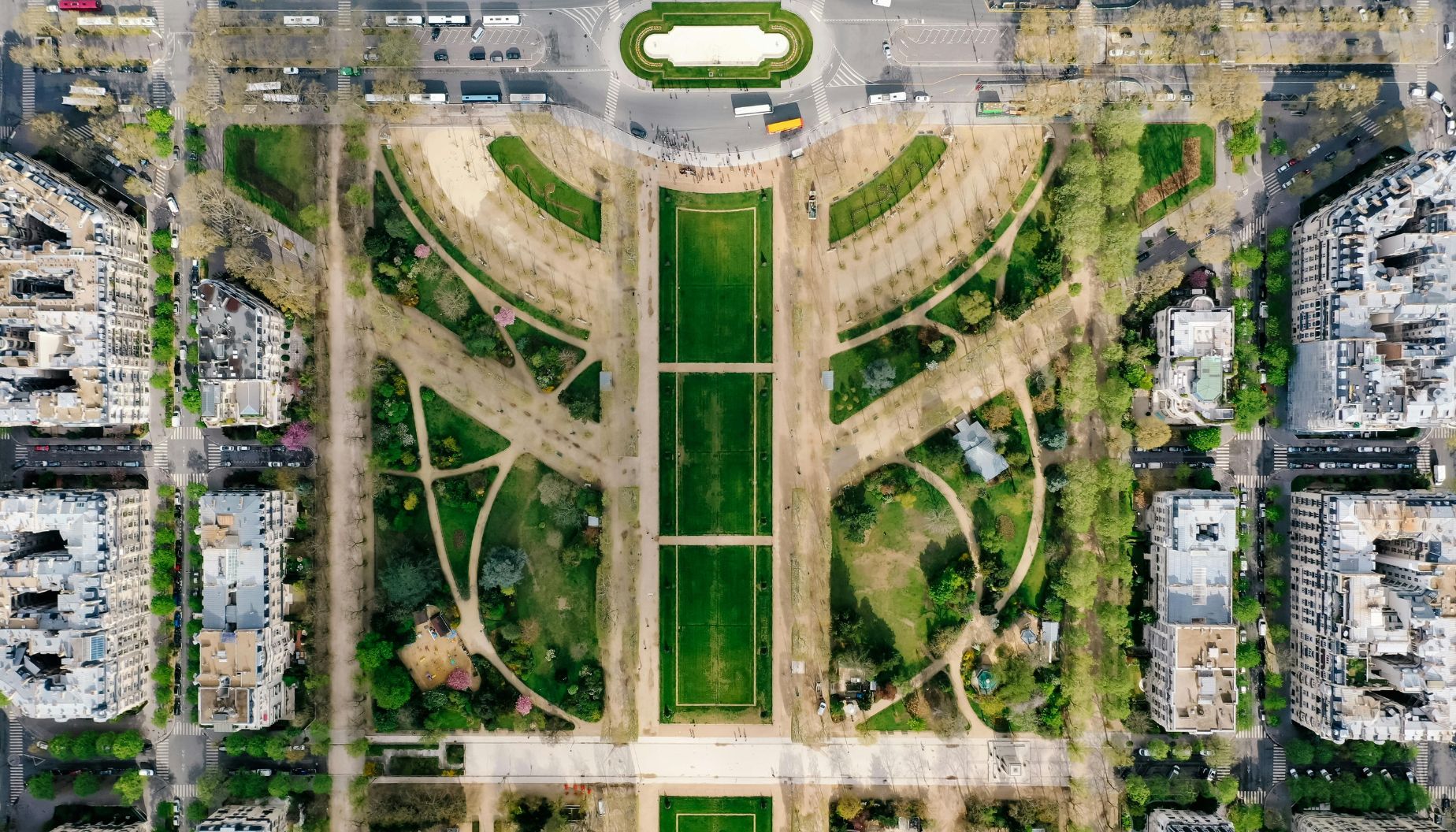
Image: “Paris” by Mikhail Nilov, Pexels.