Drafted on December 24, updated on December 27, 2025.
On Bervini and La Pellegrina, read here.
Excerpt from this article in Il Fatto Alimentare:
“…the slaughterhouse also supplied Simmenthal and Star, which have suspended their business relationships as a precaution. Bolton [owner of the Simmenthal brand] told Report that only 6% of the canned meat came from Bervini…”
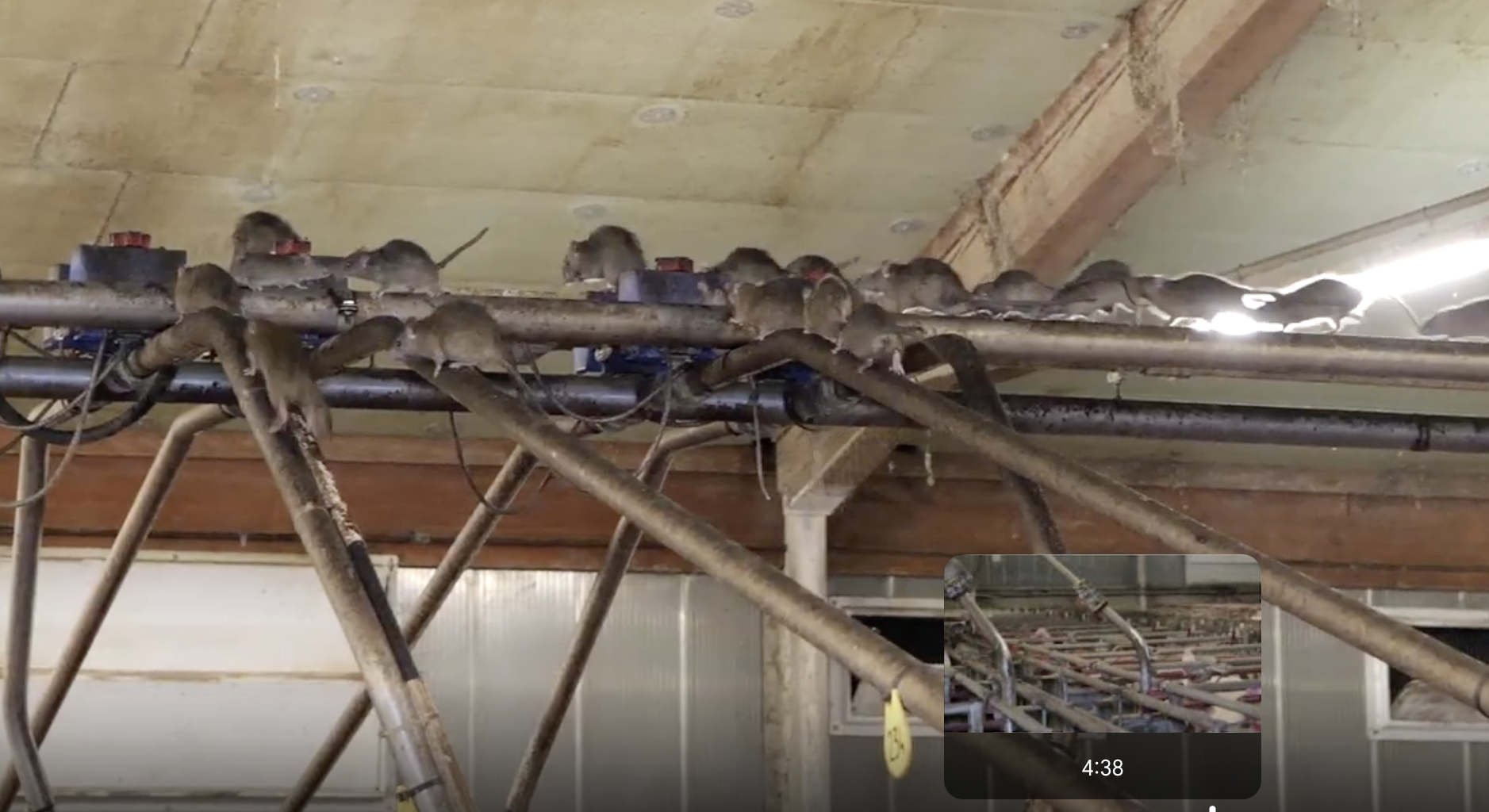
“The practice of thawing and processing imported meat (mainly from South America) had already been underway since 2018…”
“Another plant in the group, the one in Trento, is said to have been involved in cooking expired meat. According to a worker, the label was replaced on some packages, with a new expiry date moved forward by two years…”
What makes this affair even more serious is not only what happened in the Bervini slaughterhouses, but the silence that surrounded it afterwards.
Il Fatto Alimentare filed a formal request for access to documents, which was rejected. It requested two interviews about the case from ATS Val Padana; both were refused because “the investigations are ongoing.” We sent several questions to ATS Val Padana to clarify how they operate and what checks they carried out, without success. We asked the company Bervini for clarifications, with no response. We requested an interview with Lombardy’s Regional Councillor for Welfare, Guido Bertolaso, which went unanswered.
A wall of silence that cannot be dismissed as a simple organizational difficulty. Because when tons of expired meat end up in catering, on cruise ships, and in pet food, this is no longer a matter of internal checks, but of protecting public health…
And yet, for more than 45 days, there was no public statement, no national alert, no list of the clients involved.
As if the matter concerned only the relationship between a company and the local health authority. As if citizens had no right to know where what they ate—or fed to their animals—ended up. And yet in Italy the food-recall system works reasonably well… For Bervini, however, it seems something jammed. It is hard to consider the absence of a complete and transparent alert, or of official notices, as an “accident” in the two scandals that emerged involving ATS Val Padana: Bervini and La Pellegrina (AIA Group).
The impression is that the alert is triggered only when it does not create systemic problems, while it is scaled down when it affects large supply chains, numerous clients, and significant interests. At this point, the question is no longer technical, but political and institutional: who decides when a food-safety issue deserves a public alert and when it can remain confined to offices? And above all: why, in the face of such serious cases, does consumer protection seem to become a secondary consideration?
Note that transparency is provided “intermittently”: in the case of the listeria risk in cooked ham, turkey breast and pork loin. Here, the recalled batches were accompanied by all the relevant information.
For the record, we reproduce the text from Repubblica of December 26, 2025:
“The Ministry of Health has decided, as a precaution, to recall some products from the market due to the risk of microbiological contamination—in particular, the possible presence of the bacterium Listeria monocytogenes—and, in one case, an excess of histamine compared to the maximum permitted values.
The measure, adopted to protect citizens’ health, came right during the holiday period and concerns certain cured meats and other foods commonly found on Christmas and New Year’s Eve tables.
On December 24, attention focused on two Lenti-branded products, both produced by Rugger Srl. The first is ‘Lenti & Lode – High-quality cooked ham,’ for which batches 2541327 and 2541328 were recalled.
The second is roasted turkey breast (‘Gran fesa di tacchino arrosto’), recalled for the same microbiological reason in batch 2541330.
On December 23, a precautionary withdrawal was ordered for a batch of oven-roasted pork loin (‘arista al forno’) under the Fior Fiore Coop brand, sold in 120-gram trays. The product concerned is identified by batch 2541329, with a minimum durability date set for January 3, 2026. In this case too, production is attributed to Rugger Srl, at its plant in Santena, in the province of Turin, for Coop Italia.
Last December 19, the Ministry reported the recall by the producer of a batch of vacuum-packed pork cracklings (‘ciccioli’) under the Serafini brand, with number 07/2025—corresponding to the month of production—and an expiry date of March 31, 2026.
Finally, due to excess histamine—a substance that can cause food poisoning if consumed in large quantities—the Aragon anchovy extract (‘colatura di alici’) was withdrawn from the market.
The Ministry advises consumers not to eat products belonging to the indicated batches and to return them to the point of sale where they were purchased.”