More Trees, Fewer Deaths: A Study Shows How Urban Canopies Help Fight Air Pollution
Excerpt from the ISDE (Doctors for the Environment) Newsletter
More Trees, Fewer Deaths: The Study Showing the Power of Urban Canopies Against Pollution
December 17, 2025
Marco Talluri
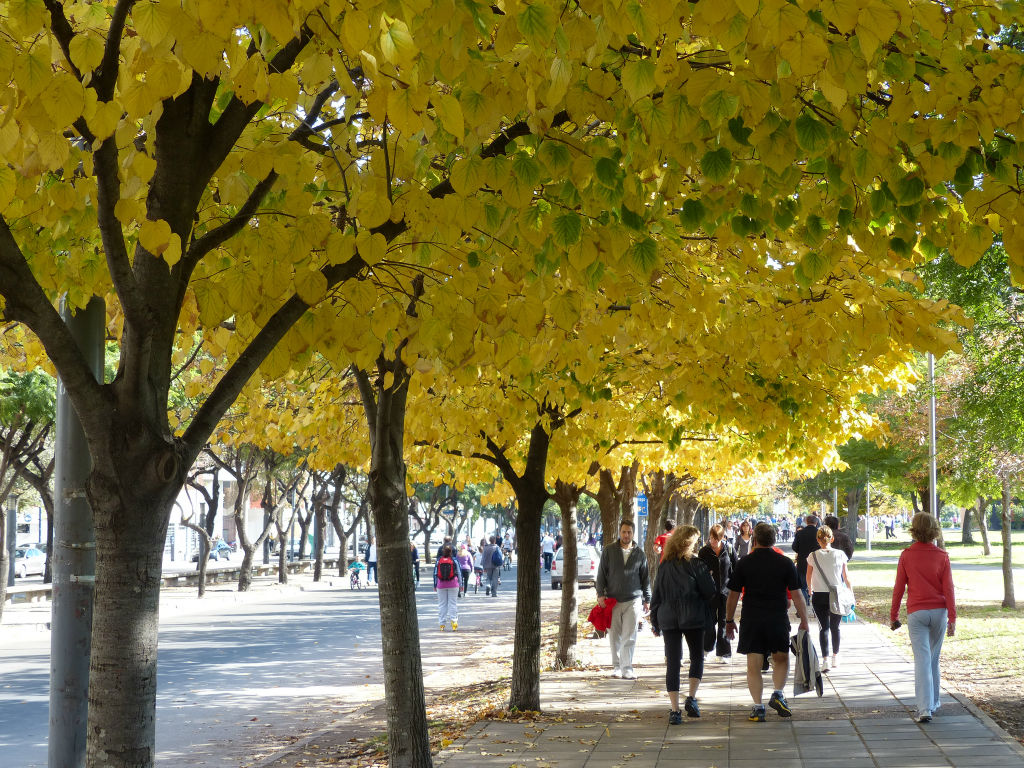
A new study published in The Lancet Planetary Health (June 2025) provides compelling evidence of the role trees play in cities: increasing urban tree cover is not only an aesthetic or climate measure, but a genuine public-health intervention.
An analysis of 744 European cities
The team led by Pierre Sicard (ACRI-ST, France) analyzed 20 years of data (2000–2019) from 744 European urban areas with more than 50,000 inhabitants, assessing the relationship between tree canopy cover, pollutant concentrations (PM2.5, NO₂, and tropospheric ozone), and premature mortality attributable to air pollution.
Average tree canopy cover in European cities is currently 18.5%, with strong regional differences: from 2.5% in Malta to 36% in Finland. Over the period observed, there was a slight increase (+0.76 percentage points), but this remains far from the 30% urban canopy target promoted by the 3-30-300 rule.
Key findings
The study reports striking results:
- Every +5 percentage points of urban canopy reduces concentrations of PM2.5 by 2.8%, NO₂ by 1.4%, and ozone by 1.2%.
- In health terms, this equates to around 4,700 premature deaths avoided each year in Europe.
- If every city reached at least 30% tree cover, lives saved would rise to nearly 12,000 per year.
- In 2019, urban trees already “saved” approximately 24,800 people from premature death due to air pollution.
The most significant reductions in mortality are observed in Eastern and Southeastern Europe, where pollution levels remain higher, while the relative benefit is smaller in Northern European countries, which are already greener and less polluted.
Trees as public-health infrastructure
The authors emphasize that urban canopies are not mere “beautification,” but health and climate infrastructure: they reduce exposure to pollutants, mitigate the urban heat-island effect, improve mental health, and support urban biodiversity.
The challenge is twofold:
- In densely built historic centers, reaching 30% will require creative solutions (vertical gardens, private greenery, tree-covered roofs and courtyards).
- In Mediterranean and Southern European cities, climate change and water scarcity may make the urban tree stock more vulnerable, requiring resilient species and long-term management strategies.
A lesson for urban policy
The study urges policymakers to treat trees as strategic allies—on par with transport and energy infrastructure. It also calls for citizen engagement, promoting planting not only in public spaces but also on private land, in a spirit of shared responsibility.
As the research highlights: “Urban greenery and emissions control must go hand in hand. Trees cannot replace anti-pollution policies, but they can amplify their benefits, creating cities that are more livable, healthier, and more climate-resilient.”
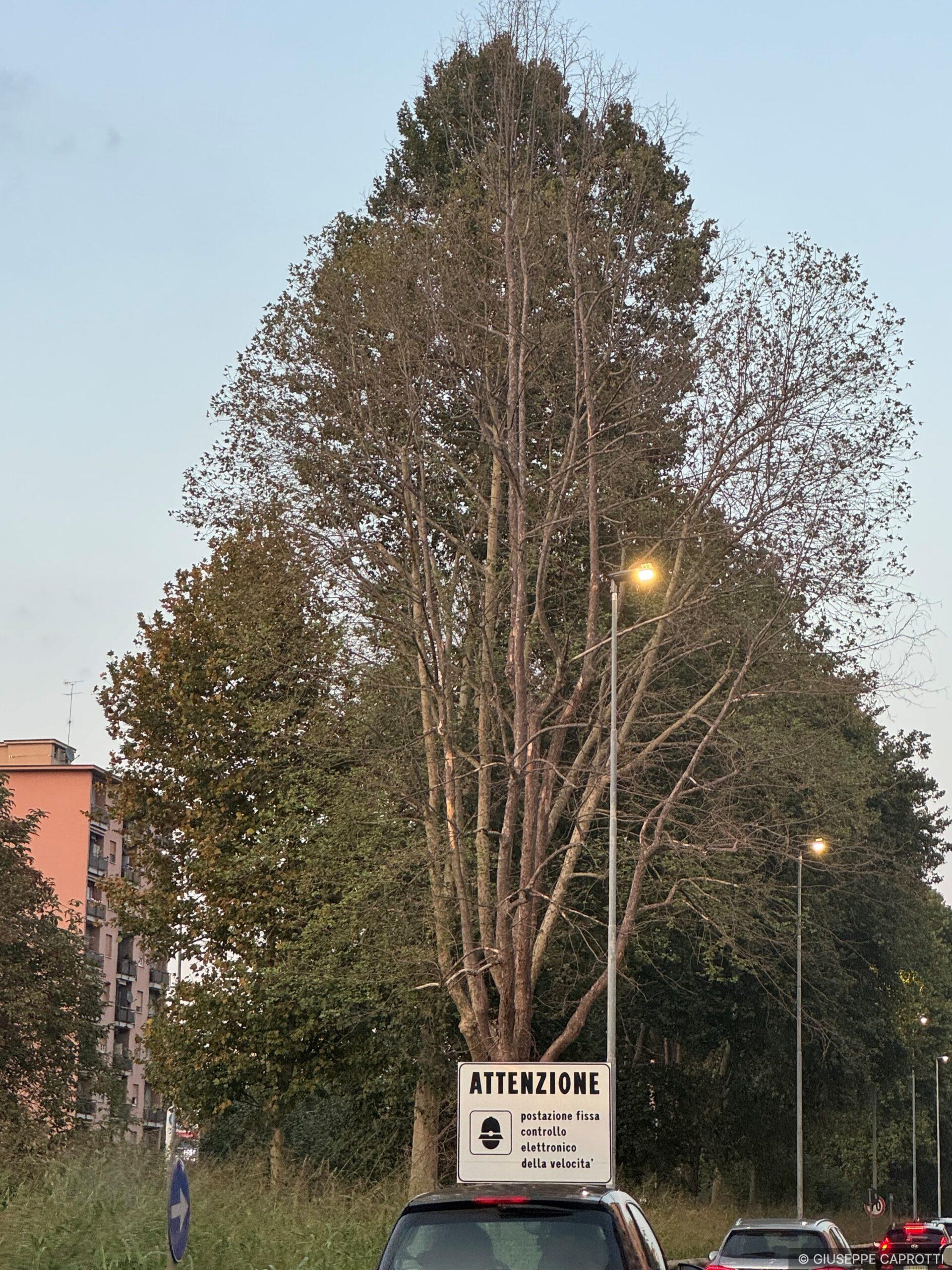
Below: a dead and hazardous plane tree in Cinisello Balsamo.