
Pollution and Climate: How Cancer Risks Are Changing
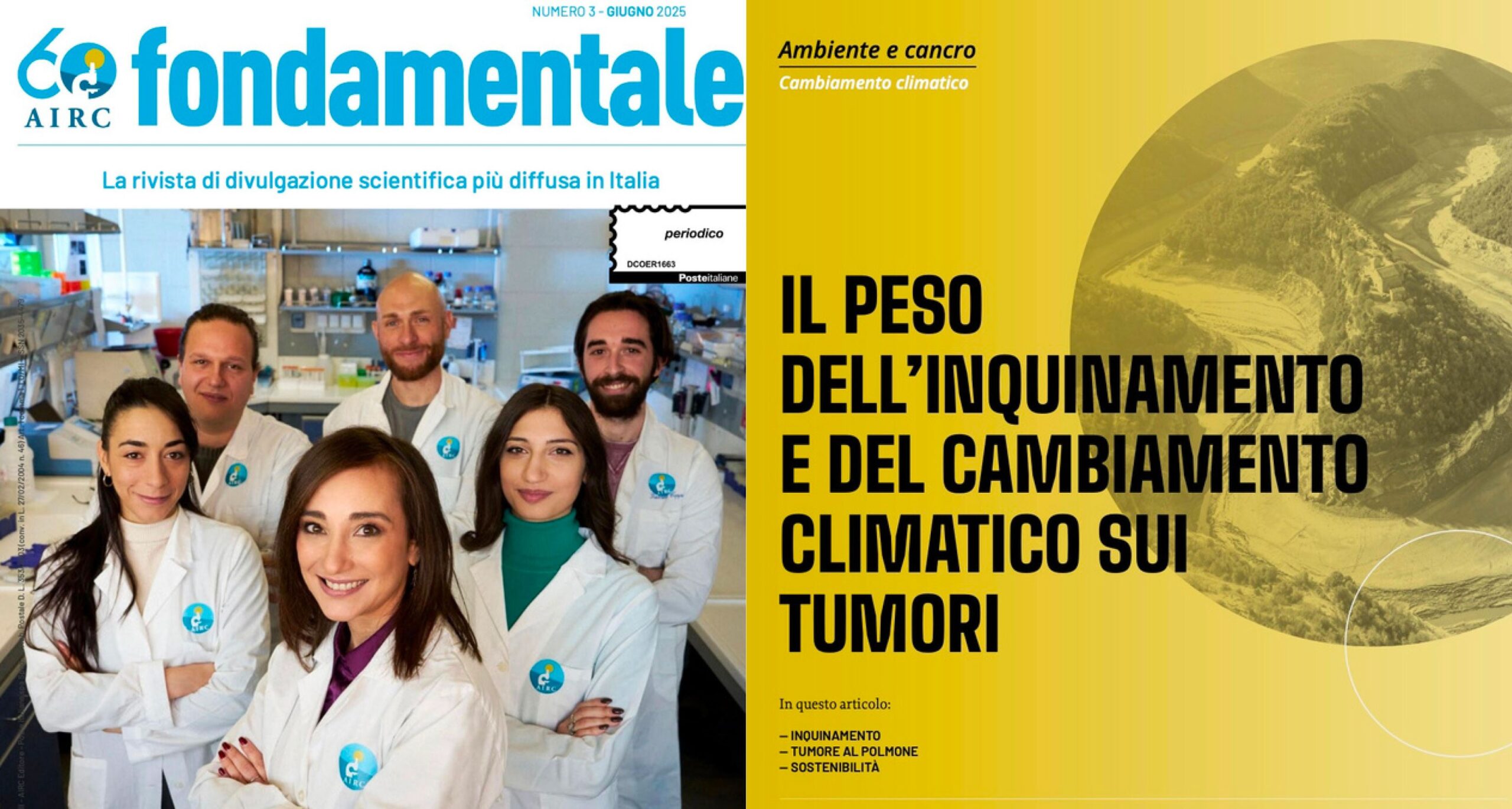
In the June 2025 issue of Fondamentale, the magazine of AIRC (Italian Association for Cancer Research), attention is drawn to a frequently overlooked issue: the climate crisis is not only an environmental emergency, but may also influence cancer risk by increasing exposure to risk factors and making prevention, diagnosis and treatment more complex.
Below is the full text of the article.
THE IMPACT OF POLLUTION AND CLIMATE CHANGE ON CANCER
Reducing environmental pollution and adopting a more sustainable lifestyle can also help prevent and manage cancer.
By Jolanda Serena Pisano – June 2025
January 2025 was the warmest January ever recorded since 1850—the year when reliable and continuous surface temperature records began. This is not surprising, given that 2024 was the hottest year ever recorded, surpassing 2023. Global warming increases the intensity and frequency of extreme weather events such as droughts, wildfires, storms and floods, as well as rising sea levels, which could submerge cities such as Venice. Southern Europe is among the regions most affected by the climate crisis, experiencing higher average temperatures and more frequent and intense heatwaves and precipitation events. The health consequences are numerous, including heatstroke and an increased incidence of infections and respiratory conditions. Climate change also appears to affect cancer risk, both directly—for example, by promoting the spread of carcinogenic substances in the air—and indirectly, because extreme weather events may reduce access to screening and treatment.
Climate change appears to affect cancer risk through air pollutants and the disruption caused by extreme weather events.
POLLUTED AIR
Air pollution is closely intertwined with the climate crisis. On the one hand, it contributes to rising average temperatures: certain pollutants that accumulate in the atmosphere trap heat near the Earth’s surface, as occurs in greenhouses (hence the terms “greenhouse gases” and “greenhouse effect”). On the other hand, climate change fuels air pollution—for example, by intensifying hurricanes, which can destroy industrial plants and release compounds such as dioxins into the environment, and by increasing wildfires, which release benzene, polycyclic aromatic hydrocarbons and other pollutants. This was observed in early 2025 during the wildfires that devastated the Los Angeles area in California.
Although wildfires are natural phenomena in areas rich in trees and shrubs and subject to prolonged heat, several studies show that climate change and the drought it brings to certain regions have made such events approximately three times more frequent in Canada and nearly thirty times more frequent in the Amazon. It is estimated that if greenhouse gas emissions continue to rise, by the end of the century wildfires could become more than ten times as frequent as they are today. Atmospheric pollutants may compromise air quality for months or even years, causing long-term environmental and health damage. According to the World Health Organization, approximately 99% of the world’s population lives in areas where air pollution levels are unsafe. One significant consequence is the increased risk of lung cancer. Although smoking remains responsible for 85–90% of lung cancer cases and increases the risk of at least eleven other types of cancer, environmental pollution is playing a growing role.
A study published in The Lancet Respiratory Medicine, which analyzed lung cancer data from 185 countries, showed that lung cancer cases not associated with smoking are rising, particularly among women and Asian populations. The authors suggested that increasing atmospheric pollutants may be among the contributing factors.
A BROAD IMPACT
Human-driven global warming intensifies exposure to cancer risk factors in many other ways. For example, by increasing flooding, which is estimated to have risen in intensity and frequency by nearly 20%. Flood damage can include the destruction of industrial facilities, oil refineries and other sites where carcinogenic substances are present, which floodwaters may carry into residential areas. This occurred, for instance, following Hurricane Florence in North Carolina in September 2018.
The climate crisis may also increase cancer risk through its impact on diets. According to estimates published in 2016 in The Lancet, by 2050 climate change could reduce food availability by 3.2%, including a 4% reduction in fruit and vegetable availability. This could result in more than 500,000 deaths, primarily because it would promote less healthy diets and increase cardiovascular disease and cancer incidence. Climate change may also favor the proliferation of microorganisms associated with certain cancers. For example, at higher temperatures, maize and other crops are more frequently contaminated by molds that produce aflatoxins, substances that increase the risk of liver cancer.
Climate variations also contribute to the thinning of the atmospheric ozone layer and reduced cloud cover, thereby increasing exposure to ultraviolet radiation, a known risk factor for melanoma and other skin cancers.
AN OBSTACLE TO CANCER PREVENTION AND TREATMENT
Preventing, diagnosing and treating cancer requires adequate resources, including electricity and appropriate therapies. For this reason, cancer patients are among the populations most vulnerable to the effects of extreme weather events. In 2018, Hurricane Maria struck Puerto Rico, damaging infrastructure and rendering certain radiotherapy machines unusable, while also disrupting a facility that produced many of the IV bags used in the United States for drug administration. As a result, not only were many Puerto Rican cancer patients unable to receive proper treatment, but shortages also affected patients in the United States, where several centers could not obtain antibiotics and other necessary medications.
Similarly, extreme weather events may delay cancer diagnoses by disrupting laboratory services. Such disruptions can reduce patient survival, as demonstrated by a study published in 2019 in JAMA. Researchers compared data from patients with non–small cell lung cancer (NSCLC) treated with radiation therapy. For 1,934 of them, treatment had been interrupted due to a cyclone. Compared with 129,080 patients who completed the same therapy without natural disaster interference, those whose treatment was disrupted experienced longer overall treatment times yet had a shorter average survival—approximately two months less. The disadvantage increased when the environmental disaster lasted longer.
ADDRESSING THE CLIMATE CRISIS
Over the past century, deaths caused by environmental disasters have decreased nearly tenfold, from approximately 500,000 per year between 1920 and 1930 to around 38,000 in 2020. This reduction is partly due to national and international measures such as environmental monitoring systems and community engagement in identifying social and health needs to mitigate disaster impacts.
What can be done to prevent the worsening of the climate crisis? More than 100 countries are currently committed to reducing environmental impact and global warming, yet projections suggest that at this pace Europe will reach climate neutrality only by 2100. Governments must therefore act immediately and more decisively.
At the individual level, meaningful action is also possible. Many sustainable behaviors align with healthy habits that help prevent cancer. For example, choosing public transportation, cycling or walking instead of driving reduces greenhouse gas emissions and counteracts physical inactivity, a risk factor for certain cancers. Similarly, increasing the consumption of legumes and vegetables while reducing meat intake can both lower greenhouse gas emissions and decrease cancer risk. Plant-based foods—key allies in cancer prevention—also have the lowest environmental impact.