
Carla Venosta: A Passion for Design, Her Writings, and Commitment to Women’s Rights
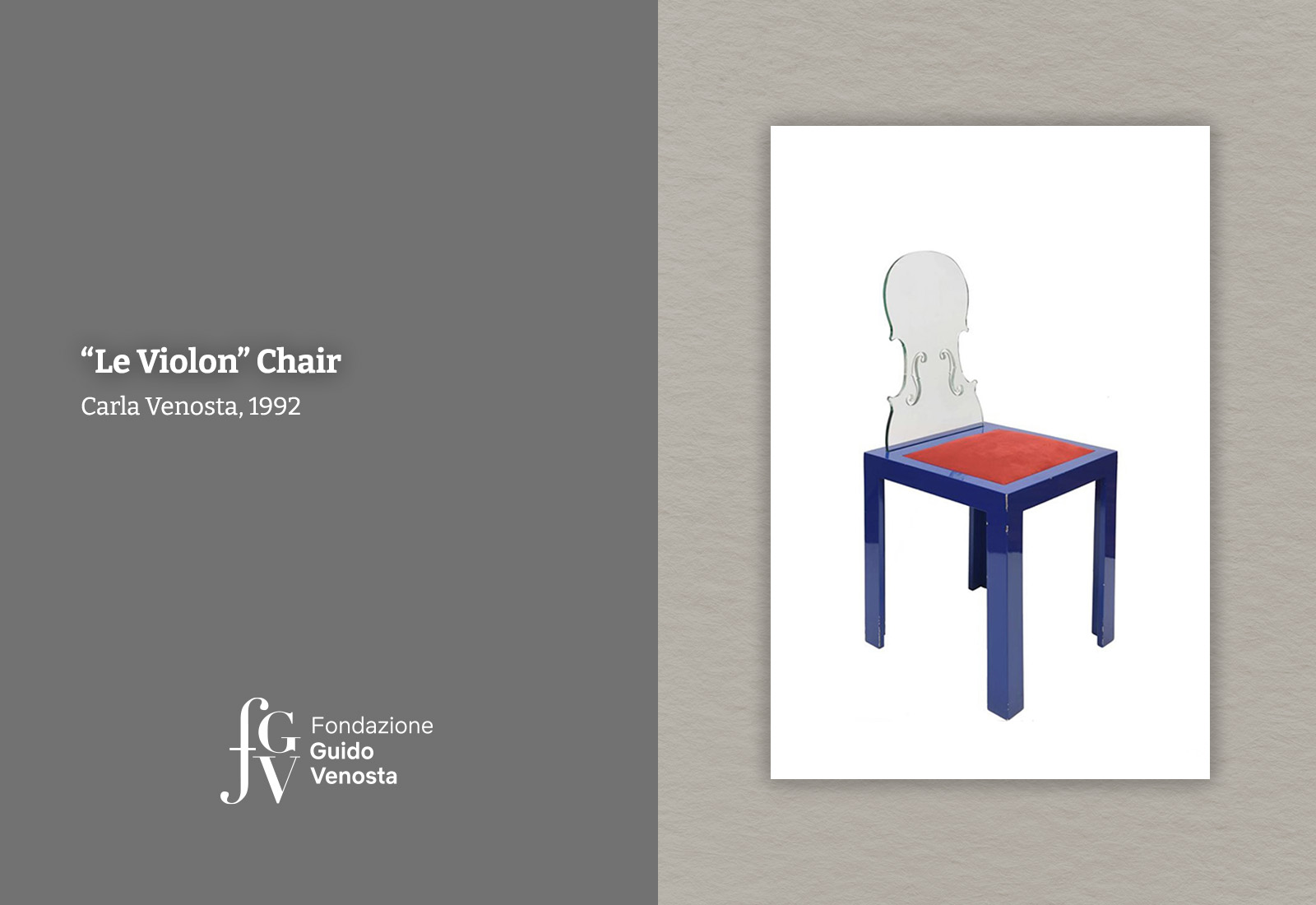
Carla Venosta’s passion, talent, and rich professional background are evidenced by numerous citations and articles in industry literature—both about her and authored by her. Just consider the many exhibitions she has curated and participated in, both in Italy and abroad. One notable example is From the Spoon to the City in the Journey of 100 Designers, held at the Palazzo dell’Arte in Milan in 1983 during the ICSID (International Council of Societies of Industrial Design, now WDO – World Design Organization) Congress, where she had served as Vice President from 1979 to 1981.
Her remarkable creations have also been showcased in various exhibitions, such as Women in the Workshop, held in 2013 as part of the annual European Days of Artistic Crafts. Interestingly, among the many facets of Venosta’s multifaceted talent, it was not her industrial design work that was selected for this event, but rather her contributions to furniture design. As a result, her works were displayed in the Silverware: Unconventional Designs section.
Her impressive career is meticulously documented in the book curated by V. Voltolina and G.F. Farioli, Carla Venosta. 30 Industrial Design Projects in Italy, published in 2007. The essence of the book is clear:
“Carla Venosta’s Milanese studio is one of the cornerstones of Italian Design. Her name is inextricably linked to ingenious solutions for design challenges across multiple fields: design, fashion, and architecture. Twice awarded the prestigious Compasso d’Oro prize, she has always sought to translate new technologies into industrial design, creating a system of objects that transcend the problem itself. Gaining recognition in the field of exhibition design, installations, and urban planning, Carla Venosta has also played a key role—through her political commitment—in advocating for women’s presence in society.”
Fortunately, her extensive archive, including drawings, models, prototypes, and more, is preserved at the CSAC – Study and Communication Archive Center in Parma.
For Carla Venosta, design was about ideas, and as she once wrote, “designing the design” was one of the things that excited her most. Among her projects for the FGV—a foundation she established in memory of her husband, Guido Venosta, but unfortunately did not have the time to fully develop—was one that aimed to involve St. John’s College at the University of Cambridge, where Guido Venosta had studied. The project would have explored the concept of civic fabric: how to preserve its legacy, how to build it from scratch, and to what extent a region’s or a country’s civic fabric serves as a strategic driver of economic development. It would have been a truly remarkable initiative.
Venosta’s passion and profession as a designer also shaped her work at FGV. The establishment of the Il Ponte Award, which was presented annually from 2004 to 2014, stemmed from her experience in design for development—a concept rooted in the Ahmedabad Declaration of 1982 that promotes an ethically and socially responsible approach to design. Notably, the award itself was designed by her.
A woman like Carla Venosta, driven by strong passions, was naturally drawn to political engagement. A staunch democrat and a socialist aligned with the Craxian movement, she devoted herself to improving women’s conditions in society and championing women’s architecture—a discipline that includes the design of spaces for and by women, advocating for its recognition, appreciation, and academic study.
Years after her passing, in her commentary on the book Women’s Spaces: Home, Work, and Society, edited by M. Bassanelli and I. Forino (2024), Graziella Tonon—former Professor of Urban Planning at the School of Civil Architecture at the Politecnico di Milano—comments on one of the book’s sections:
“Carola D’Ambros (A Room of One’s Own: Women’s Domestic Design from the Postwar Era to the 1970s) laments how, in architecture and design, ‘the cultural heritage produced by women remains largely unknown’. After reviewing the state of historical and critical research on women’s work in the field, she conducts a bibliographic analysis of major Italian design magazines from the postwar period onward (p. 35). Her goal: to extract significant examples of domestic environments designed for women and compare the outcomes achieved by male and female designers. The result of this ‘duel’—which readers can sense from the very beginning—is clear: in terms of sensitivity and alignment with women’s needs, Carla Venosta and Cini Boeri outshine their male counterparts (even the famous ones).”
This commentary fittingly concludes the portrait of a woman whose work and commitment remain not only relevant today but exemplary. Indeed, Carla Venosta deserves to be far more widely known beyond the specialized fields of architecture and design.
Sources:
Albiate (MB), Villa San Valerio, Archives of Villa San Valerio, Carla Venosta Archive, Materials for a Possible Book for Guido – 2008 (unpublished draft).
Bibliography:
- R. BARILLI, “From the Spoon to the Metropolis”, in La Stampa, November 17, 1983.
- WDO, Past Board of Directors, ICSID Executive Board 1979-1981, Carla Venosta, Vice President (https://wdo.org/about/people/board/past-boards/#1698613093843-0df690dd-c8c3).
- Carla Venosta. 30 Industrial Design Projects in Italy, edited by V. Voltolina and G.F. Farioli, Milan, 2007.
- Women in the Workshop, edited by A. Pansera and M.T. Chirico, Milan, Palazzo Morando Costume Moda Immagine, March 15 – April 21, 2013.
- G. CAPROTTI, Le ossa dei Caprotti, Milan, 2024/3, pp. 101, 372.
- G. TONON, Women’s Spaces. Commentary on the Book Edited by Michela Bassanelli and Imma Forino, in Casa della Cultura, project “Città Bene Comune”, January 17, 2025 (https://www.casadellacultura.it/1547/gli-spazi-delle-donne).
- CSAC – Study and Communication Archive Center, Carla Venosta Collection (https://bbcc.regione.emilia-romagna.it/pater/loadcard.do?id_card=197214).