
Giorgina Venosta (b.1940 – d.2021)
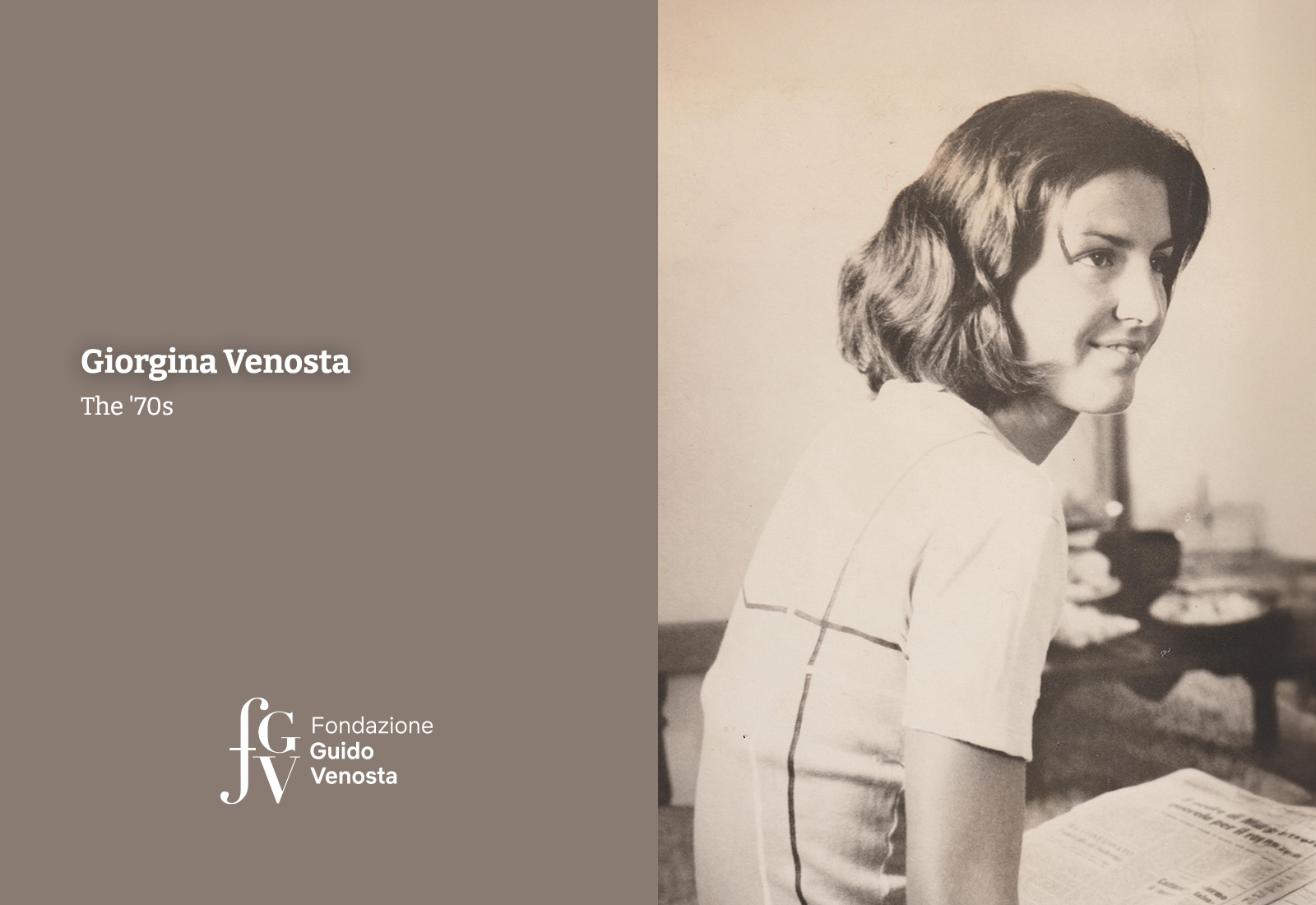
Giorgina (officially registered as Giorgia Umberta) was born in Milan to Guido Venosta and his first wife, Luisa Quintavalle. As a child, a young woman, and later an intelligent, cultured, and stunning adult, she would, with her youthful and demure charm, become one of the leading figures of the summers in Forte dei Marmi—a period that marked not only the golden age of Milanese youth.
In 1958, at the age of seventeen, she married Bernardo Caprotti, a textile entrepreneur twice her age who had just embarked on the great supermarket adventure in Italy with what would later become Esselunga. In 1960, their son Giuseppe was born, followed by their daughter Violetta in 1962; however, the marriage soon fell into crisis, and Giorgina left the marital home, separating from Bernardo.
Needing to work to support herself, she also pursued a career as a model, walking the runway for Emilio Pucci. Her true breakthrough came when she became one of the “Rinascentine,” employed at the prestigious Milanese department store alongside other young women who, between the seventies and nineties, either were or would become prominent figures in Milan’s social and cultural life—and, not least, her close friends, such as Rosellina Archinto, Donatella Brustio Cerri, and Adriana Botti Monti. Later, she gained experience at “Corriere della Sera,” working in the press office of Giulia Maria Crespi—who, at the time, was the soul of the publication and another dear friend of Giorgina—and finally at the Milan branch of the auction house Christie’s, where she rose to an executive position. In 1992, she took a bold step by launching “Consulenza d’arte” with two partners, Giovanni Godi and Ludovico Caumont Caimi, where she specialized primarily in antique gems and jewelry.
Meanwhile, in her personal life, Aldo Bassetti entered the scene—first as a partner and then as her husband. He was the heir to a prominent textile entrepreneurial family and a successful businessman in his own right, notably as co-founder of the newspaper “La Repubblica” alongside Carlo Caracciolo and Eugenio Scalfari. With him, she shared every aspect of her private and social life, including their commitment to social causes.
Both Giorgina and Aldo were, from the very beginning, part of FGV and served as its board members until their passing.
Sources:
Albiate, Villa San Valerio Archives, Giorgina Venosta Archive, Private Archive.