
Giuseppe Caprotti’s Social Commitment at Esselunga: The People – Esselunga’s Employees
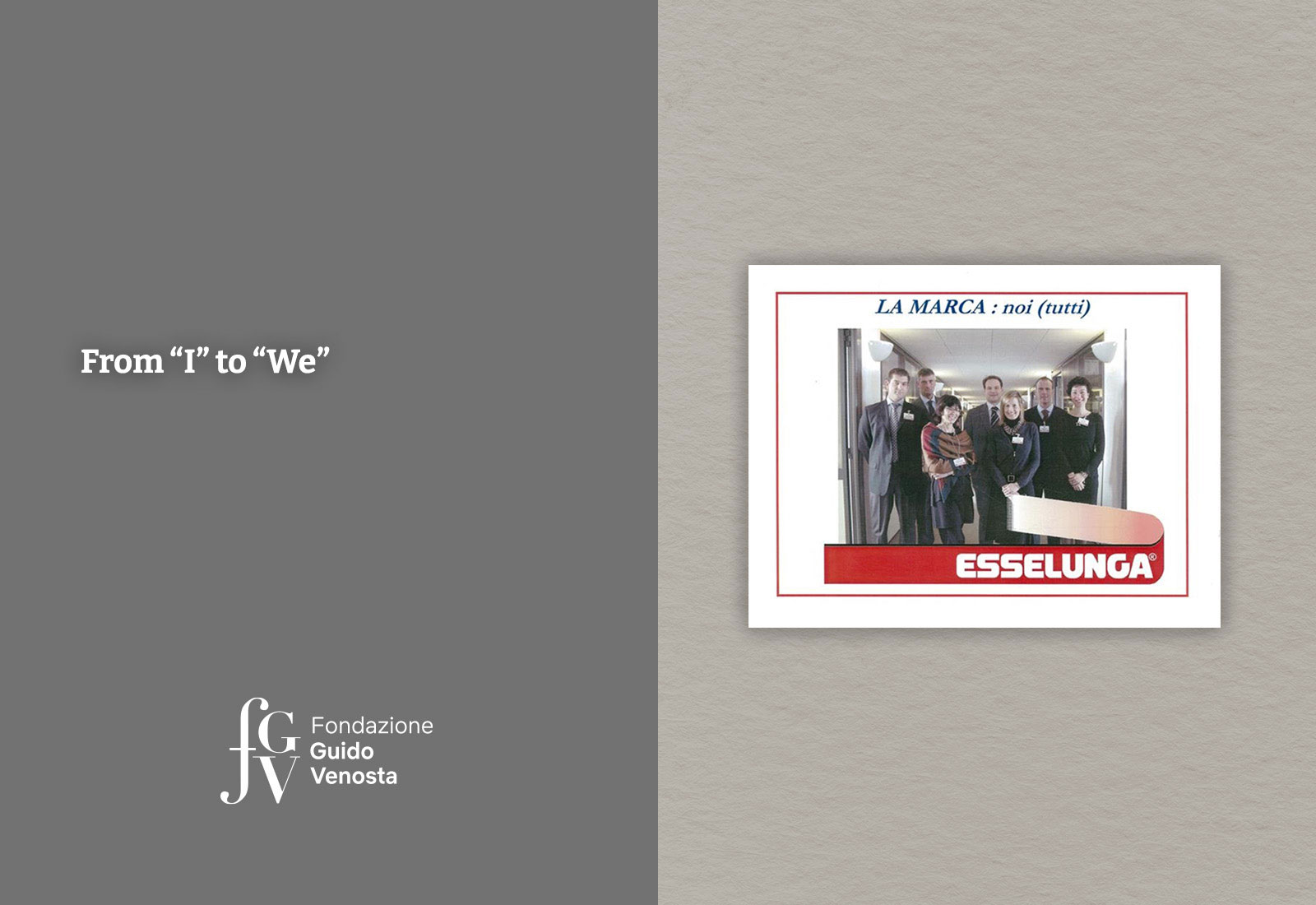
When I joined Esselunga, Italy was in the thick of the so-called “Years of Lead,” a time when hardly a day went by without demonstrations, “proletarian expropriations,” protests—and especially robberies, including those by the notorious Vallanzasca gang in Milan.
It was an era of relentless, hard-fought strikes, which my father Bernardo met with steadfast resolve. By pushing back so decisively—and mounting major communication campaigns against the deeply ingrained idea in Italy that one has a “right” to work without the corresponding duty and commitment—he steered the company through a storm of union unrest. That achievement deserves full recognition, especially considering the climate in which he was operating.
In my book Le ossa dei Caprotti (Feltrinelli, 2003), I briefly describe this final phase:
“In Tuscany I also witnessed the last confrontation between Esselunga and the unions, during which about a thousand employees left the company. In 1986 a CGIL union representative was convicted after falling into a trap set by the carabinieri, who staged an attempted extortion: ‘Give me 12 million lire or I’ll call a strike,’ read the note delivered to the company. When I arrived in Florence at the end of 1989, tensions remained sky-high. One day I found myself in the middle of a strike outside the Via di Novoli supermarket, where Coop and Superal employees, our competitors, tried to provoke me into a brawl. Signs read “ESSELUNGA SS” and the police did nothing. On another occasion in Viale Giannotti, workers abandoned their open tills when they saw ‘Giuseppe Caprotti,’ the boss’s son, walk in. I’d lived through something similar years before in Milan, where union militants tried to blackmail the company and even blocked and assaulted me outside the Limito offices. I had scaled the gates despite a dense picket line of red flags and even being targeted by Radio Radicale’s programs. It felt like a movie: one employee had jumped the protective fence around the internal parking lot rather than enter normally, triggering a major uproar. That day, Bernardo rewarded everyone who managed to reach their workplace, me included. At that time, managers and executives would fill in for strikers on Saturdays.” (Caprotti, Le ossa dei Caprotti, p. 149)
Though Bernardo saved the company, his relationship with most employees remained strained, and tensions with the unions persisted into the early ’90s.
When I stepped in, I aimed to defuse that tension by applying what I’d learned in the United States—shifting “from I to we”: moving decision-making from a few hands to broad collaboration among colleagues and across departments, wherever possible.
Consider the store managers, who had previously received only top-down orders, had no say in selecting their store’s merchandise, and didn’t even know their own sales figures. Starting in the early 1990s, everything changed:
“From 1992 onward, we began gathering all the managers in Milan—a move that astonished them—to brief them on the revolution under way. We explained the logic behind our ‘non-food’ offerings and the new shelving strategies. They were encouraged to make requests and offer suggestions directly to me. A group of managers was even invited to our planogram meetings, making it easier to discuss what wasn’t working in various product categories. For the first time, they gained direct access to weekly sales data for their supermarkets, data that had been closely held by inspectors. Managers thus became true protagonists in running their stores, participating in decisions and seeing the results of their efforts firsthand.” (Caprotti, Le ossa dei Caprotti, p. 148)
This “new course” extended to all store and warehouse staff, who began attending training sessions and update days. One cashier, upon learning she was invited to a course, burst into tears—hardly believing anyone cared about her role, which had long been invisible within the company.
In the same spirit of collective effort, and with input from both store and headquarters staff, we created the little booklet Valori e Principi (“Values and Principles”), collaboratively assembled by every employee from 2002 onward to summarize the guiding values everyone must know:
“At the start of the 2000s, we involved all personnel, at headquarters and in stores, to help define the company’s core values and principles. The first draft appeared in 2002 and was refined in 2003. Human resources were declared ‘the pillar’ of our success, and teamwork was stated to be ‘the foundation for achieving results.’ For example, ‘Esselunga encourages its employees to work in teams where everyone expresses their potential toward shared objectives. Relationships among people are clear and based on mutual respect.’ The document even anticipated principles of equity and sustainability that companies of all sizes must now follow—or face severe penalties from investors, lenders, and customers. It pledged that Esselunga would develop organic and environmentally sustainable products (including packaging), build stores integrated with their communities and low in environmental impact, reject child, involuntary, and forced labor, reduce emissions, support social projects, and help preserve Italy’s artistic heritage.
These guiding values later appeared in Esselunga’s first Social Report in 2003. They aren’t abstract ideals but lines of conduct. In 2002 we hired 3,500 people—95 percent on permanent contracts. We adopted top-of-sector pay scales and implemented support policies for the most vulnerable, running 50–60 internships a year for people with disabilities, with the aim of hiring them. Also in 2002, we dedicated 200,000 hours to training—1.7 percent of total personnel costs—engaging 6,000 employees. We then introduced performance bonuses for all operational departments, whereas previously only supermarket managers had been rewarded under a rigid hierarchy. The results spoke for themselves. In 2003, CIRM—the Nicola Piepoli Market Research Institute—carried out an internal survey of 1,711 staff (over 10 percent of the workforce) showing that from 2001 to 2003 the share of employees who said they were ‘satisfied’ or ‘very satisfied’ with Esselunga as an employer rose from 49 percent to 72.1 percent.” (Caprotti, Le ossa dei Caprotti, pp. 199–200)
In short, if my father saved the company in the ’80s, I sought to modernize its methods—moving it toward practices akin to those of the American chain Publix, where employees own shares in the company they serve. I did so by reducing turnover, which in turn increased employee loyalty. And more than twenty years after I left, the public and private messages I still receive tell me the path I chose was the right one.
Bibliography:
G. CAPROTTI, Le ossa dei Caprotti. Una storia italiana, Milano, 2024/3.
ID., “Le ossa dei Caprotti”. I Caprotti e gli “Anni di piombo” (1960 – 1980): Renato Vallanzasca
ID., Storia: Valori e principi delle Risorse Umane di Esselunga, 22/02/2022
USA: perchè Publix è un fenomeno unico al mondo