Why you always need to read food labels
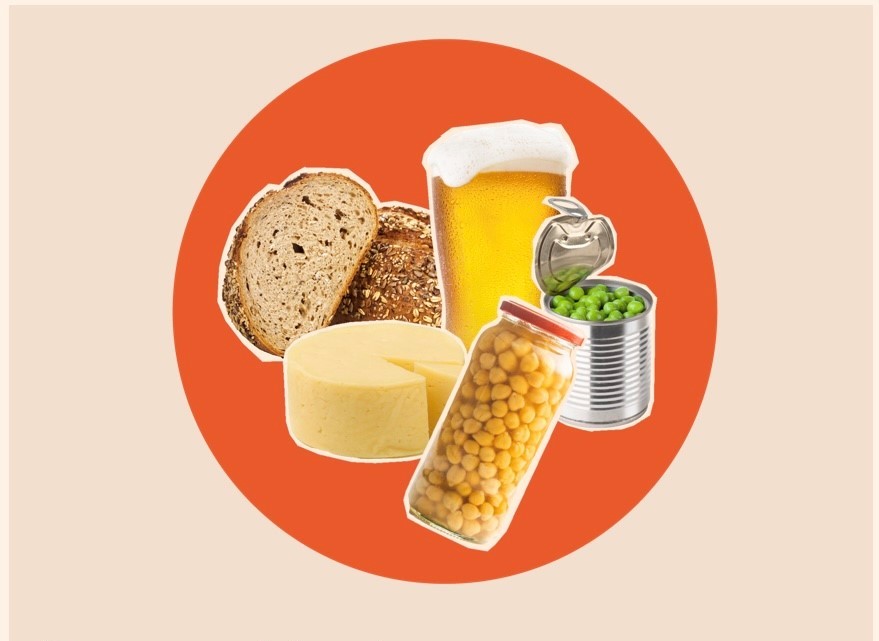
According to the NOVA food classification, there are four categories:
- Fresh or minimally processed products.
- Substances derived from plants or animals through industrial processing.
- Plant or animal parts modified with salt, sugar, oils, or fats to preserve or enhance palatability.
- Ultra-processed foods: industrial creations made by chemically recombining food, modifying it, and adding flavors, artificial colors, and other additives.
With all that in mind, even an apparently harmless product like dried fruit can hide potential health pitfalls.
Take this product, for example—a snack you might eat while traveling with a well-known airline.
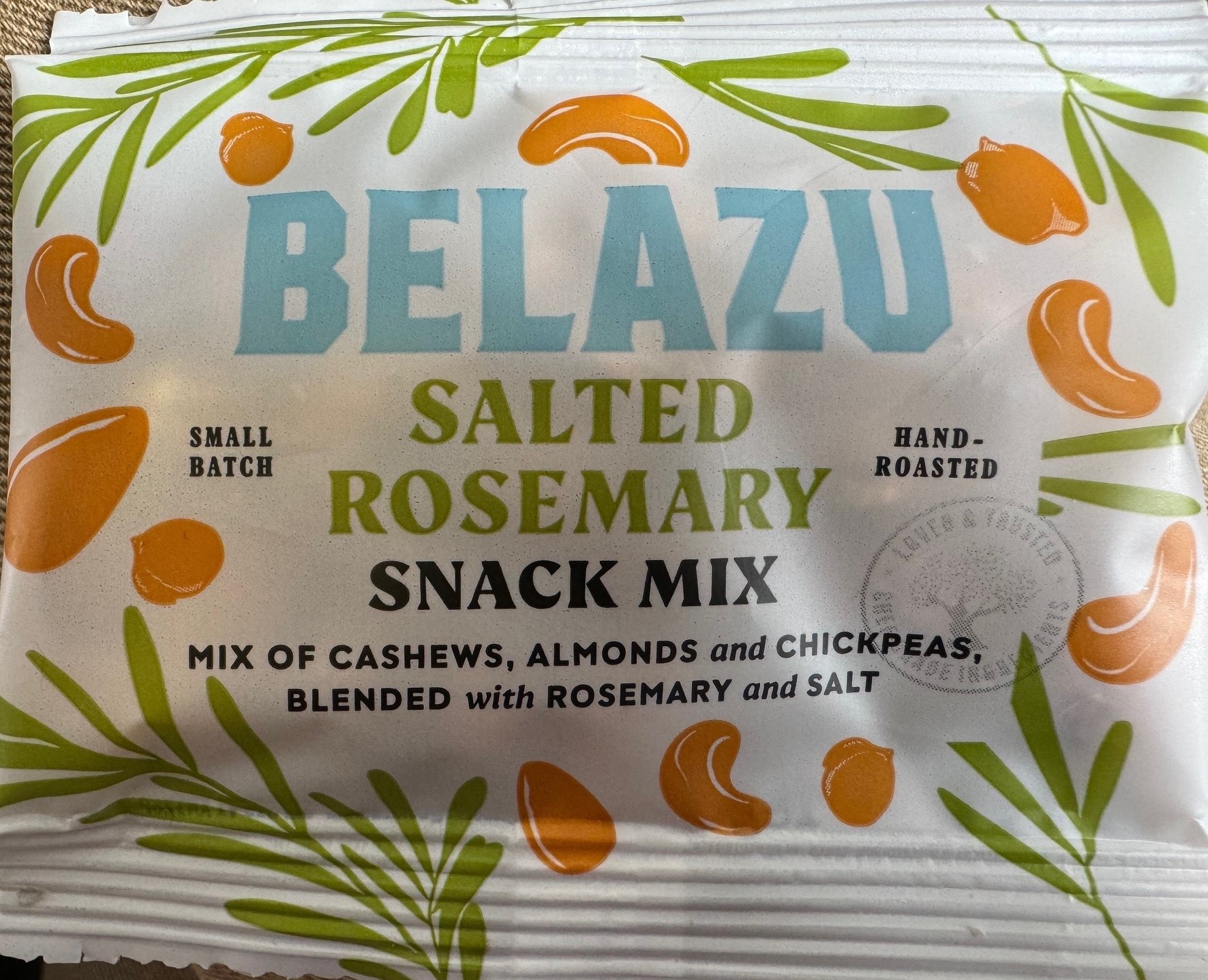
At first glance, based on its ingredients, it appears to belong to the first category: cashews, almonds, chickpeas (fried…), rosemary, salt.
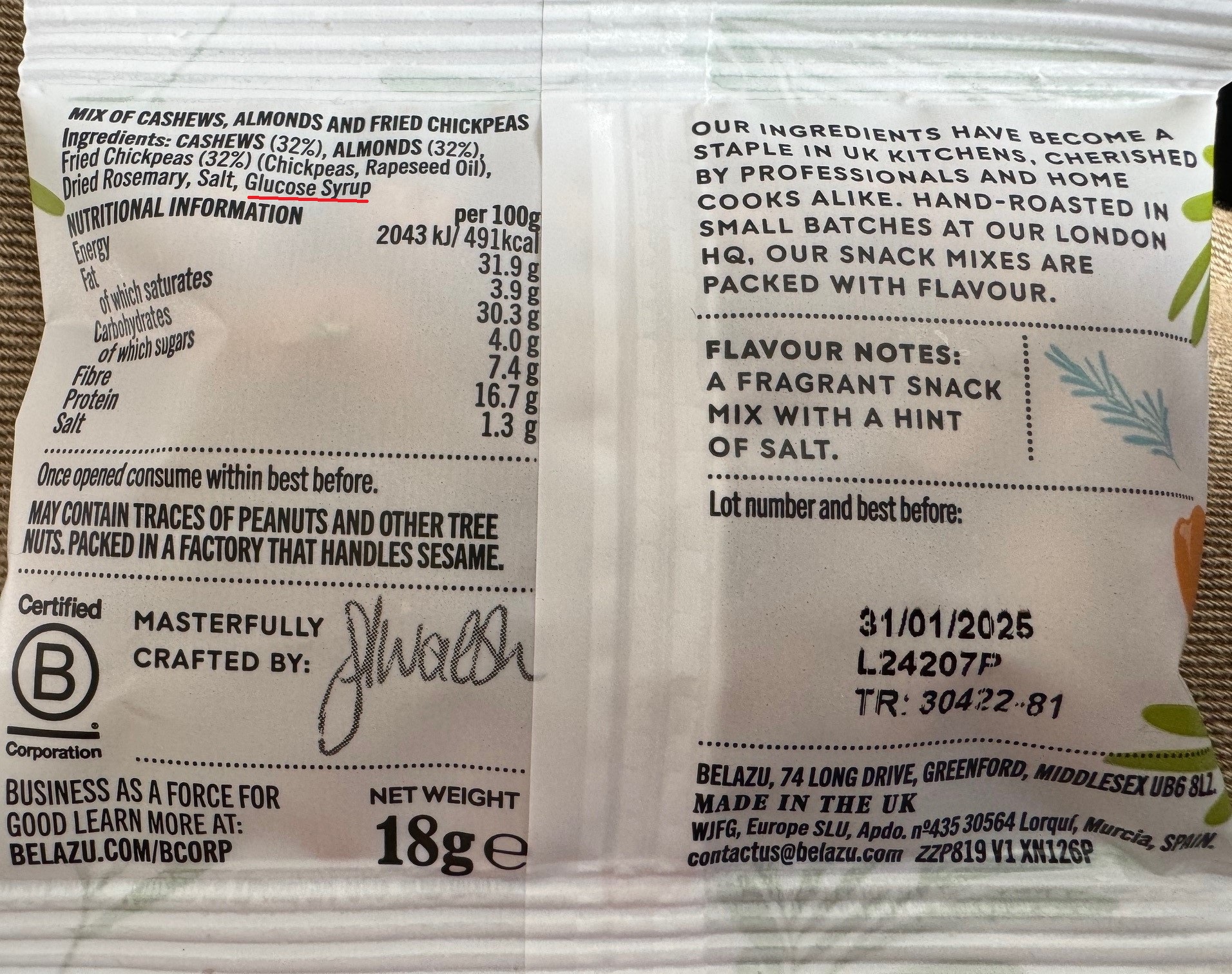
But looking at the back of the package, besides the salt—which should definitely be avoided—there is also glucose syrup (sugar).
So this snack, seemingly “innocuous”, fully falls into the third category.
“Plant or animal parts modified with salt, sugar, oils, or fats to preserve or enhance palatability.”
From an almost “dietary” food, it turns into a product that contributes to weight gain.
For this very reason, food labels must always be carefully read.