Drafted on July 31, 2023, updated on December 25, 2024
From the Financial Times, May 19, 2023, by Anjana Ahuja
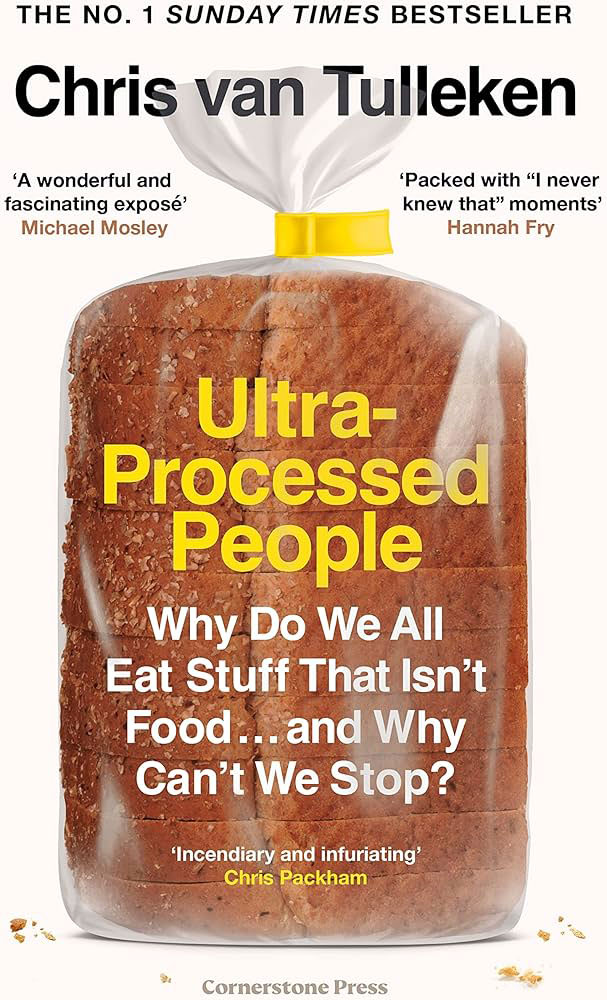
Ultra-Processed People by Chris van Tulleken: How Our Food Became Garbage
The podcaster and presenter tackles the complex issue of additives with clarity and sensitivity—without resorting to moralizing. In industrialized countries such as the United Kingdom, the average person consumes 8 kg of additives per year.
On Monday, the World Health Organization issued new guidelines advising non-diabetic consumers not to use non-sugar sweeteners to control their weight. Its nutritionist stated, “NSS are not essential dietary factors and have no nutritional value.” And yet, incarnations of NSS—such as aspartame, sucralose, and stevia—are scattered throughout common foods and beverages, particularly in low-fat versions that claim to be health-enhancing. This announcement hardly surprises Chris van Tulleken, a London-based podcaster, TV presenter, and infectious disease physician. In Ultra-Processed People, his fearless investigation into our addiction to ultra-processed food (UPF) identifies sweeteners as just one element of a modern nutritional landscape where “most of our calories come from food products containing novel synthetic molecules, never found in nature.”
“We’re no longer eating food,” an academic memorably tells him, “but rather, edible substance produced industrially.” These substances are created using a mix of inexpensive ingredients, mechanical processing, and synthetic additives such as stabilizers and flavors. These foods are so prevalent that in industrialized countries like the UK, the average person consumes 8 kg of additives per year—four times the weight of the flour we buy annually for home cooking.
However, it’s not so much the additives themselves that are the problem, but rather the diets they accompany. Tragically, van Tulleken writes—echoing Henry Dimbleby’s recent book Ravenous—that these modern diets are proving harmful: to our waistlines, our teeth, our gut microbiomes, and even the environment. His key message will have you checking your pantry: if an ingredient on a food package isn’t something you’d normally use in a home kitchen, it’s likely UPF.
Once you start noticing them—soy lecithin or high-fructose corn syrup, for instance—they’re everywhere. And, if justice is served, this compelling, well-documented indictment will shame politicians and shake the food industry to its very core, a core driven by money. The era of UPF consumption likely began in 1879, when chemist Constantin Fahlberg, while experimenting with coal tar in an attempt to produce medicinal compounds, inadvertently created saccharin—a compound 300 times sweeter than sugar and, thanks to wartime sugar shortages during World War I, the first fully synthetic compound to be added to the diet on a large scale.
This gave rise to a new era of synthetic food chemistry, wherein such ingredients made mass-produced food cheaper, more palatable, longer-lasting, and easier to transport. For cost-conscious and time-pressed consumers, these innovations were nothing short of a godsend. But we now know that processed foods also seem to drive overconsumption.
If, like me, you’ve ever wondered how the French stay slim despite enjoying croissants, butter, and wine, van Tulleken’s evidence suggests it’s because they’re consuming real sugars, real fats, and real carbohydrates—less processed and not bypassing the body’s natural regulatory mechanisms. Ultra-Processed People, based on a documentary in which van Tulleken subsists on a diet comprising 80% UPF for one month, is more than just a grand science book: it dissects a complex issue of cultural, social, economic, and political significance with clarity and sensitivity, but without moralizing; it competently evaluates the scientific literature; and it roams the globe in search of answers. It’s not the chips and fizzy drinks that make us fat, as we are led to believe, but our own shortcomings.
It’s important to note how the food industry—by recruiting compliant scientists, funding studies, pushing clever marketing messages, and influencing policy—has successfully cooked up a self-serving narrative that shifts the blame for the damage caused by their products. It’s not the chips and sodas that make us fat, as we are led to believe, but our own shortcomings—in the form of sedentary lifestyles and weak willpower. Nutrition science is rife with conflicts of interest, whether it involves companies pushing infant formula in low-income countries or KFC partnering with charities that work on obesity policy.
The industry, as van Tulleken rightly argues, should never be at the political table: “No one thinks that [the tobacco company] Philip Morris should finance doctors who produce research demonstrating that smoking is harmful… [or that] tobacco legislation should be written by charities funded by British American Tobacco. So why should food policy related to health be any different?” This culture persists. When the WHO sweetener story broke this week, I scanned responses from various scientists. One comment stood out as particularly equivocal. A statement about conflicts of interest revealed that the scientist had previously worked with the International Sweeteners Association. That was my breaking point. Ultra-processed people: Why are we all eating things that aren’t food… and why can’t we stop?
Chris van Tulleken, Cornerstone Press (in Italy published by Vallardi, 384 pages).
Anjana Ahuja is a scientific commentator.
This is, therefore, a very interesting review of this physician’s book, which can be further complemented by reading: consuming too much packaged food increases the risk of developing cancer.
Clearly, the problem is not confined to Anglophone countries—it’s a global issue: diabetes is expected to affect over 1.3 billion patients by 2050. According to new models published in The Lancet, the burden of this disease will increase worldwide, exacerbated by social and geographical inequalities and discrimination.
Moreover, there is an inexplicable rise in cancer among millennials. An increasing number of young people in the developed world are being diagnosed with the disease.
Also read: in Italy, 17 million people are obese or overweight.
When it comes to children, we are among the European countries with the highest prevalence of overweight and obesity.
This is all due to the factors already mentioned, among which ultra-processed food stands out for its characteristics:
- High calorie count
- Few nutrients
- Addictive properties
The only criticism one might level at the commentator is that she did not consider certain aspects of van Tulleken’s book. For example, the popularizer of medicine links the production of “non-food” (such as emulsifiers) to chemistry, mentioning DuPont—a manufacturer known for producing additives as well as PFAS, which have been at the center of a major groundwater contamination scandal in the USA.
Ahuja also glossed over the link between food and the environment—a connection that van Tulleken highlights very well, notably implicating Nestlé.
All the more reason to read this book, which I found illuminating.
I discuss van Tulleken’s book further in this article.
On the topic, you can also read:
- In the USA, obesity kills more than guns
- Food: the worsening quality is confirmed
- Consuming too much packaged food increases the risk of developing cancer
- Food: the Nova classification (from fresh to ultra-processed) and the lobbying activities of the food industry
- U.S. Food and Drug Administration: white bread will finally be removed from the list of healthy foods
Very interesting: USA, a multi-million dollar legal action against Big Food. The renowned law firm Morgan & Morgan (USA) has launched a multi-million dollar lawsuit against 11 Big Food giants—Coca-Cola, General Mills, Kellogg, Kraft Heinz, Mars, Mondelēz International, Nestlé, PepsiCo, etc.—for allegedly causing chronic diseases (type 2 diabetes and non-alcoholic fatty liver disease, at the age of 16) in its client Bryce Martinez
Even donuts—or doughnuts—are now found in pastry shops in Albiate.